If you have ever watched a Labrador Retriever eat, you know they don’t just consume food—they inhale it. Labradors are legendary for their bottomless appetites, acting as if every single meal is the last one they will ever see.
While their food-motivated nature makes them an absolute joy to train, it presents a hidden danger. Overfeeding a growing Labrador puppy can cause rapid skeletal development, straining their joints and paving the way for debilitating hereditary conditions like hip and elbow dysplasia. On the flip side, underfeeding deprives this high-energy large breed of the crucial macro-nutrients needed to build strong muscles and a healthy immune system.
How do you strike the perfect balance for a dog that constantly acts starved?
This comprehensive, data-driven Labrador puppy feeding guide eliminates the guesswork. Backed by veterinary nutritional science, you will learn the exact daily feeding schedules, calorie-conscious portions, and developmental best practices to transform your sweet puppy into a thriving, lean, and agile adult Labrador.
The Core Blueprint: How Much to Feed a Labrador Puppy
There is no one-size-fits-all cup measurement for Labrador puppies. Portions vary wildly depending on whether you feed an English (show-line) or American (field-line) Labrador, their current age, and the caloric density of your specific brand of kibble.
The gold standard for determining portions is calculating your puppy’s Daily Energy Requirement (DER) in kilocalories (kcal) or utilizing a precise weight-based chart.
The Ultimate Labrador Puppy Feeding Chart
The figures below represent the total daily food volume for an average Labrador puppy using high-quality, large-breed commercial puppy kibble (averaging 350 to 400 kcal per cup).
| Puppy Age | Estimated Weight Range | Total Daily Amount (Cups) | Daily Feeding Frequency |
| 2 Months (8 Weeks) | 10 – 15 lbs | 1.5 – 2 cups | 4 meals per day |
| 3 Months | 20 – 30 lbs | 2 – 3 cups | 3 meals per day |
| 4 Months | 30 – 40 lbs | 2.5 – 4 cups | 3 meals per day |
| 5 to 6 Months | 40 – 55 lbs | 3.5 – 5 cups | 2 meals per day |
| 7 to 9 Months | 50 – 70 lbs | 3.5 – 4.5 cups | 2 meals per day |
| 10 to 12 Months | 55 – 80 lbs | 3 – 4 cups | 2 meals per day |
Critical Snippet Optimization Note: Always cross-reference your specific commercial dog food bag’s feeding guidelines. Every brand utilizes distinct formulations with unique caloric densities. If your puppy is highly active or lethargic, alter these baseline amounts by 10% after consulting your veterinarian.
Establishing the Routine: The Ideal Feeding Schedule
Puppies thrive on predictability. For a young Labrador, a highly structured feeding schedule stabilizes blood sugar levels, reduces anxiety around meal times, and makes housebreaking exponentially easier. What goes into a puppy on a schedule comes out of a puppy on a schedule.
To optimize digestion, space out meals evenly and implement this developmental schedule:
1.The Four-Meal Split:Age: 8 to 12 Weeks.
Divide your puppy’s total daily portion into four equal meals spaced roughly 4 hours apart (e.g., 7:00 AM, 11:00 AM, 3:00 PM, and 7:00 PM). Their tiny, developing stomachs cannot process massive volumes of food at once without experiencing painful gas or diarrhea.
2.Transition to Three Meals:Age: 3 to 5 Months.
Consolidate their portions into three meals per day (Breakfast, Lunch, and Dinner). Eliminate the mid-afternoon feeding while slightly increasing the volume of the remaining three meals to meet their rising caloric needs during this peak growth period.
3.The Adult Two-Meal Routine:Age: 6 Months and Beyond.
Transition your Labrador to their permanent lifelong schedule: two equal meals per day (Morning and Evening). Ensure the final evening meal is served at least 3 hours before bedtime to allow for proper digestion and a final bathroom break.
Best Practices for Nutritional Success
1. Mandate Large-Breed Puppy Formulations
Never feed a Labrador puppy standard adult dog food or generic “all-life-stages” kibble. Large-breed puppy formulas are specifically engineered with a precise, restricted Calcium-to-Phosphorus ratio (typically $1.1:1$ to $1.3:1$).
Controlled calcium levels prevent the bones from growing faster than the surrounding ligaments and muscles can support, vastly mitigating the risk of developmental orthopedic diseases (DOD).
2. Ditch the Standard Bowl: Combat Gastric Dilatation-Volvulus (GDV)
Because Labradors tend to behave like living vacuum cleaners, they swallow massive pockets of air when eating quickly. This behavior puts them at risk for Gastric Dilatation-Volvulus (GDV), commonly known as bloat. GDV occurs when the stomach fills with gas and twists on its axis, cutting off blood flow—a life-threatening emergency.
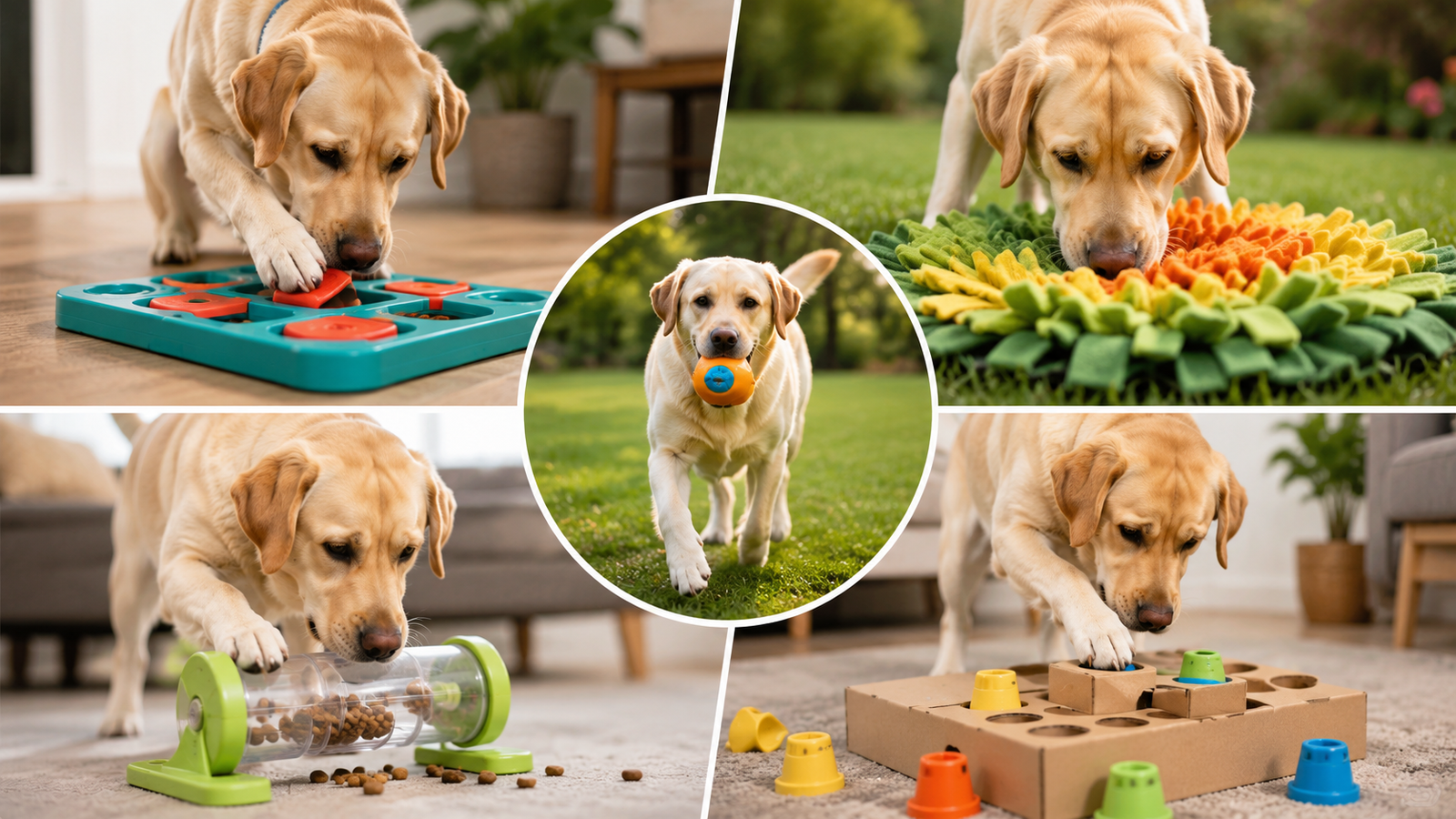
- Implement Puzzle Feeders: Use maze bowls or interactive rubber toys to force your puppy to navigate around obstacles, turning a 30-second meal into a 10-minute mental workout.
- Enforce Post-Meal Rest: Strict veterinary guidelines dictate no rigorous running, fetching, or playing for at least 60 minutes before and after eating to prevent stomach twisting.
3. Master the Body Condition Score (BCS)
Do not rely exclusively on the scale to gauge if you are feeding the correct amounts. Utilize the visual and tactile Body Condition Score (BCS) system:
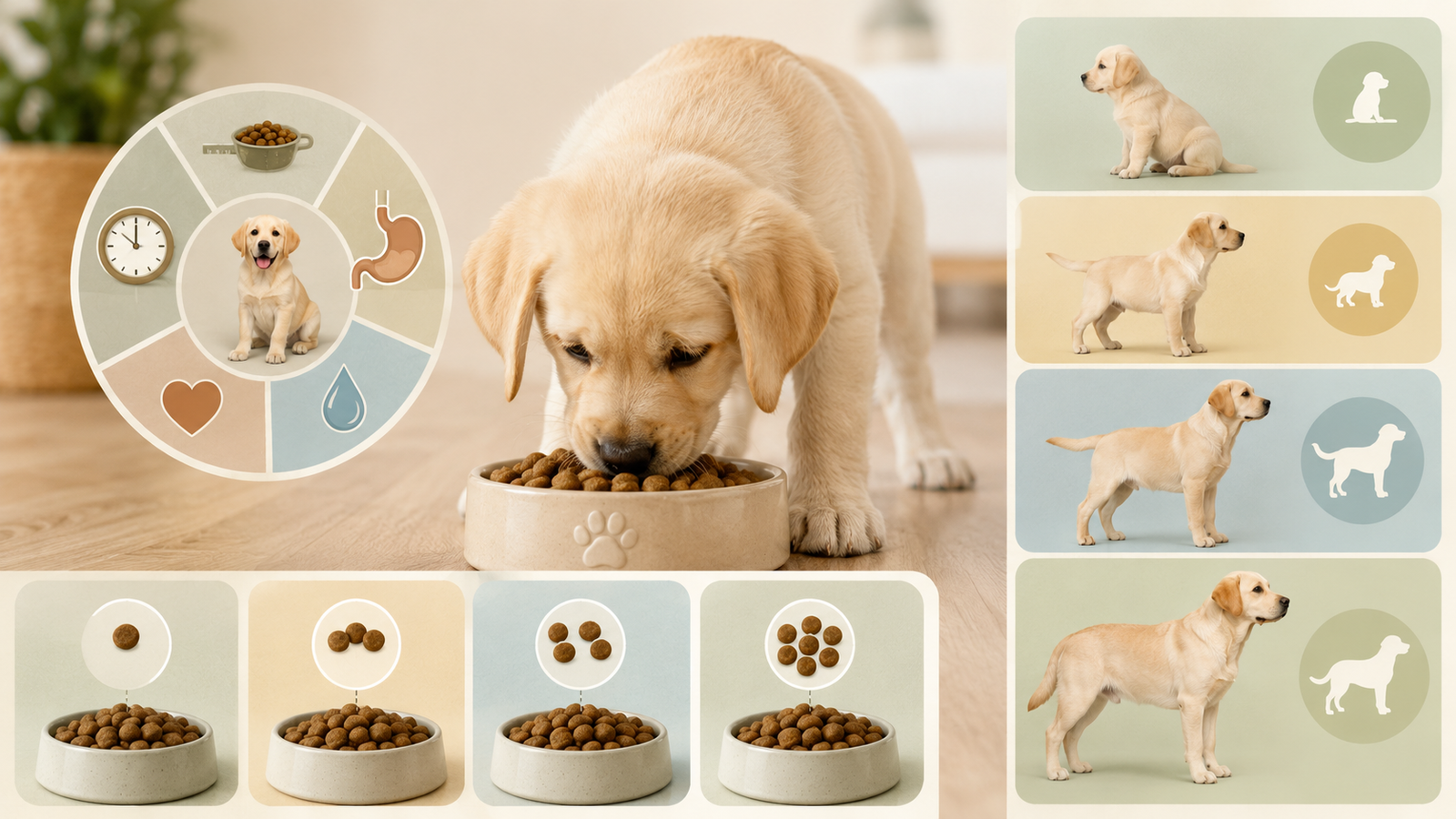
- Underfed: The ribs, vertebrae, and pelvic bones are easily visible from a distance, with no palpable body fat covering them.
- Ideal Weight: The ribs are not visibly prominent but can be easily felt with light finger pressure, resembling the knuckles of a flat hand. When viewed from above, the puppy displays a distinct hourglass waistline.
- Overweight: The ribs are buried beneath a thick layer of fat, requiring firm downward pressure to feel. The waistline is completely absent, showing a flat or rounded silhouette from above.
Frequently Asked Questions (FAQ)
When should I switch my Labrador from puppy food to adult food?
Transition your Labrador to adult formulation food when they reach skeletal maturity, which occurs between 12 and 14 months of age. Switching to adult food too early deprives them of essential growth nutrients, while switching too late can cause excess fat accumulation.
Can I give my Labrador puppy milk or table scraps?
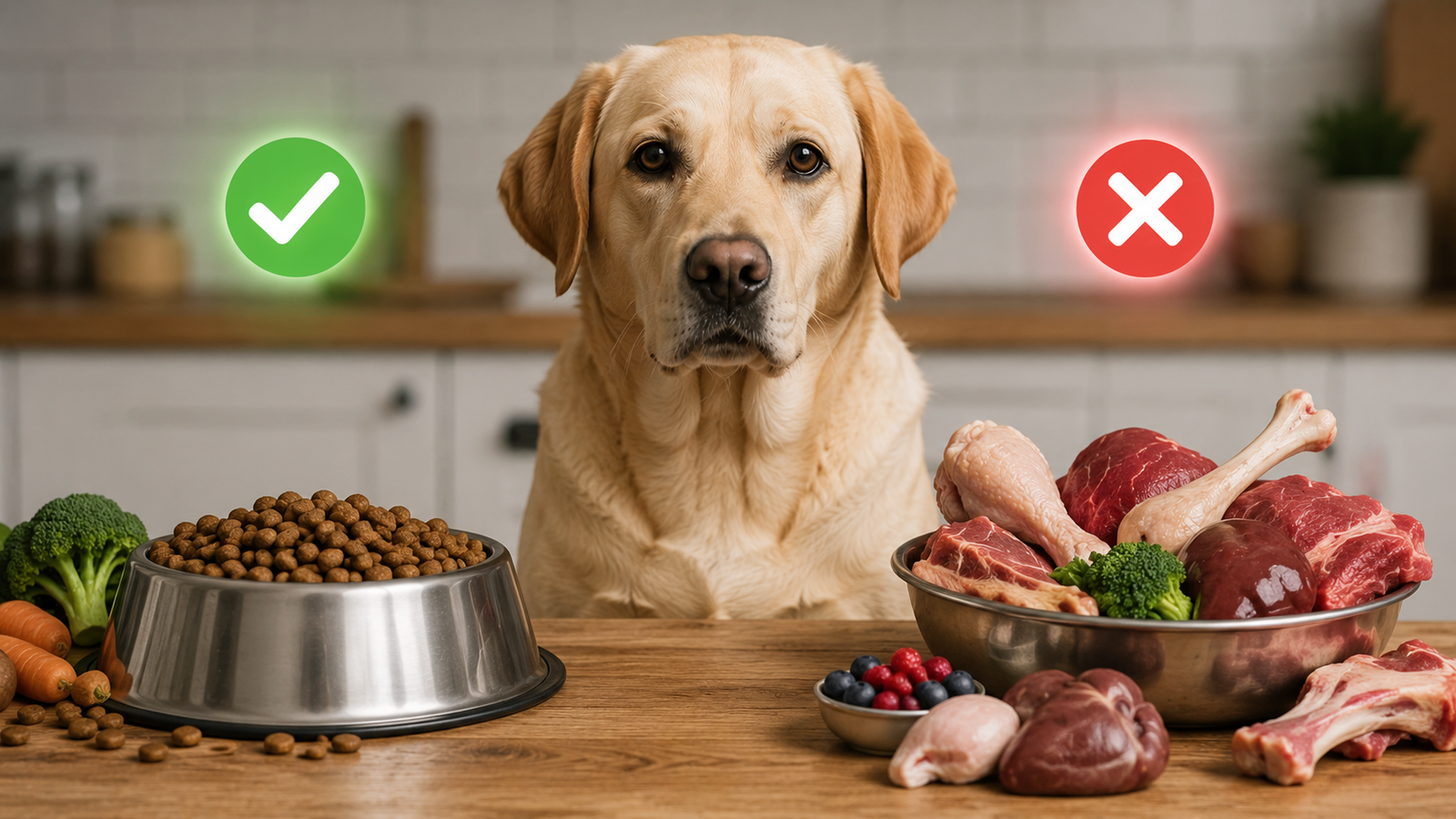
Avoid milk, as most puppies lose the enzyme lactase after weaning, leading to severe gastrointestinal upset. Table scraps disrupt their balanced macro-nutrient intake and introduce toxic ingredients like onions, garlic, or excessive sodium. Stick to puppy-safe fruits like blueberries or small pieces of carrot for training rewards.
My Labrador puppy is constantly crying for food. Am I starving them?
Likely not. Labradors carry a prevalent genetic mutation in the POMC gene, which is responsible for regulating hunger signals. This mutation essentially deactivates their internal “full” switch, leaving them permanently driven to forage. Gauge their food intake by body condition and rib coverage rather than their acting skills at the dinner bowl.
Conclusion: The Long-Term Payoff of Smart Feeding
It is hard to resist those big, soulful Labrador eyes begging for an extra scoop of food, but your discipline right now determines their lifelong mobility. By enforcing a rigorous feeding schedule, utilizing precise cup portions, and relying on large-breed puppy kibble, you are safeguarding your dog’s joints, heart, and metabolic health.
Your reward will be an incredibly fit, healthy, and happy adult Labrador ready to tackle any adventure by your side for years to come.
Are you unsure if your puppy’s current weight matches their age milestone? Let me know your Lab puppy’s exact age and weight, and we can look at whether their current growth trajectory is on the right track.