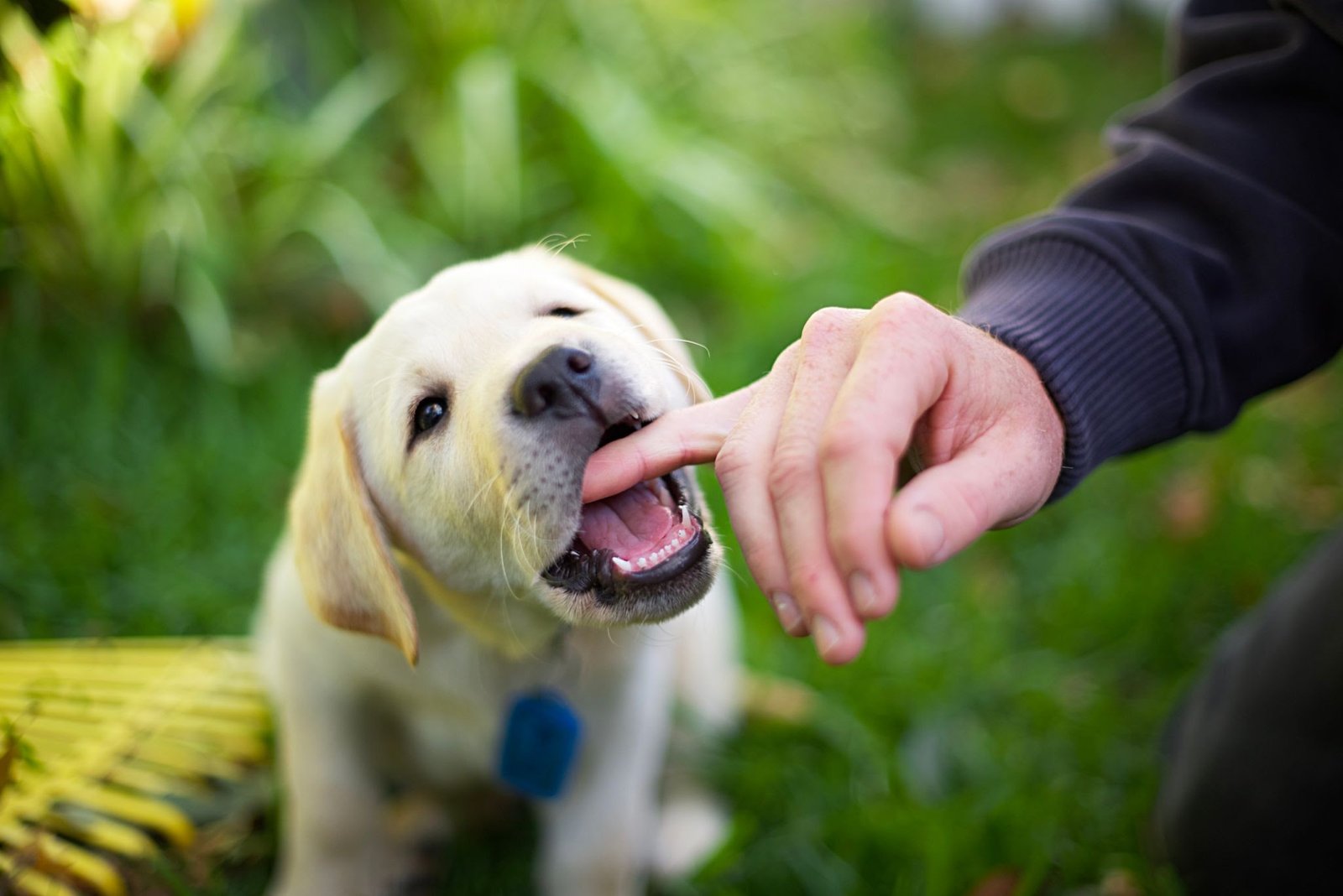
You brought home a cuddly, sweet-smelling Labrador Retriever puppy, dreaming of peaceful walks and cozy couch snuggles. Instead, you inherited a furry, four-legged “land shark” with a set of razor-sharp needle teeth dedicated to destroying your hands, ankles, and favorite furniture.
If your clothing is torn and your hands look like you’ve been wrestling a bramble bush, you are not alone. Labrador puppy biting is one of the most intense, exhausting phases of raising this otherwise deeply affectionate breed.
The good news? This painful behavior is temporary. Most Labrador puppies dramatically reduce their biting by 6 months of age, and completely stop habitual biting by 7 to 9 months, provided they receive consistent bite inhibition training.
In this comprehensive, vet-approved guide, we break down the exact biological timeline of Labrador teething, explore why Labs mouth more than other breeds, and reveal the precise psychological triggers to stop the biting behavior for good.
The Biological Timeline: When Do Labs Stop Biting?
To survive this phase without losing your patience, it helps to understand the neurological and physical development happening beneath your puppy’s skull. Labrador biting isn’t malice—it’s a mix of exploration, pain relief, and genetic instinct.
1. The Teething and Mouthing Roadmap
The severity of your puppy’s biting directly correlates with their dental development. Here is what to expect from week to week:
- Weeks 8 to 12: The “Needle” Phase: Your puppy arrives home with 28 deciduous (baby) teeth. These teeth are exceptionally sharp because your puppy’s jaw muscles are weak; the sharpness ensures that even a weak bite gets a reaction, teaching them early lessons about their own strength. Biting at this stage is frantic and exploratory.
- Months 3 to 5: Peak Teething: This is the most challenging period. The baby teeth begin shedding to make room for 42 permanent adult teeth. The puppy’s gums become intensely inflamed, sore, and itchy. Gnawing on hard objects—including your hands and baseboards—counteracts the pressure of erupting adult teeth, offering temporary pain relief.
- Months 6 to 7: The Adult Transition: By the sixth month, most adult teeth have fully erupted. The biological urge to bite to relieve gum pain subsides. If your Labrador continues to bite hard after 6 months, the behavior has shifted from a physical need to a learned habit or attention-seeking routine.
- Months 8 to 9: Adolescent Testing: While the physiological urge to bite is gone, adolescence brings boundary testing. An under-stimulated, adolescent Lab may resort to playful mouthing or “nipping” to demand your attention or signal boredom.
Why Do Labrador Puppies Bite So Much? The Retriever Instinct
While all puppies go through a teething phase, Labradors are notoriously mouthy. To understand why, we have to look at their history.
Labrador Retrievers were selectively bred for centuries to spend hours retrieving waterfowl from rugged lakes and marshes. They possess an intense evolutionary drive to capture, hold, and carry objects with their mouths. This genetic trait is known as being highly oral.
When a young Lab puppy lacks a duck to fetch, their brain directs that instinctual oral drive toward the next closest thing: your moving feet, flowing pant legs, or waving hands.
The Concept of “Soft Mouth”: Adult Labradors are famous for their “soft mouth”—the ability to carry a delicate bird without breaking the skin. However, puppies are not born with this control. They must learn how to regulate the pressure of their jaws through a process called bite inhibition.

Step-by-Step Strategy: How to Stop a Lab Puppy From Biting
Many well-meaning dog owners inadvertently reinforce biting by reacting in ways that puppies find highly rewarding. If you yell, pull your hands away frantically, or push your puppy back, your Labrador views this as a high-energy game of tug-of-war or wrestling.
To permanently extinguish unwanted biting, implement this four-part, scientifically backed framework.
1.Teach Bite Inhibition (The ‘Ouch’ Method):Weeks 8 to 16.
Do not immediately try to stop your puppy from touching you with their mouth altogether. Instead, teach them that human skin is fragile. When your puppy bites your hand during play, emit a sharp, clear “Ouch!” or a high-pitched yelp. Let your hand go completely limp. Stop playing and freeze for 10 to 15 seconds. This mimics how littermates communicate: “You bit too hard, so the fun stops.”
2.Redirect to Appropriate Outlets:Continuous Implementation.
Never leave your hands bare without an alternative nearby. The moment your puppy opens their mouth to nip, calmly slide a high-value teething toy or a durable rubber chew right between their jaws. When they bite the toy instead of your skin, praise them warmly. This teaches them: “You cannot chew my skin, but you can chew this.”
3.Implement Negative Punishment (The Reverse Timeout):For Persistent Biting.
If your puppy ignores the toy and continues targeting your skin, do not hit, pin, or scold them. Instead, immediately stand up, cross your arms, and step over a baby gate or leave the room entirely for 30 to 60 seconds. By removing your presence, you utilize a highly effective psychological trigger: you deprive them of the one thing they want most—your attention.
4.Enforce Nap Schedules:Preventing Overtraining Burnout.
Puppies need 18 to 20 hours of sleep per day. When a Labrador puppy experiences extreme, frantic “zoomies” and refuses to stop biting despite redirection, they are almost always overtired. Their self-control erodes, much like a cranky toddler. Place them calmly into their crate or a quiet playpen with a safe chew to help them self-soothe and drift off to sleep.
Playful Mouthing vs. True Aggression: Spotting the Difference
It is incredibly common for exhausted dog parents to worry that their biting Labrador puppy is fundamentally aggressive. True aggression in young puppies is exceptionally rare.
Review the distinct indicators below to accurately differentiate between developmental play and behavioral warning signs:
Normal Playful Mouthing
- Body Language: Loose, wiggly, and relaxed posture; a wagging tail; a soft, open expression.
- Vocalizations: High-pitched, short, playful yips or growls that occur mid-bounce.
- Context: Occurs primarily during active play sessions, right after waking up, or when they are explicitly overstimulated.
Behavioral Warning Signs (Potential Aggression)
- Body Language: A stiff, frozen, or rigid posture; bared teeth; lips curled back; a fixed, intense stare.
- Vocalizations: Deep, sustained, low-pitched throaty growls that do not stop when you back away.
- Context: Occurs when guarding an object, a food bowl, a specific spot on the couch, or when handled in a way that causes discomfort or fear.
If your puppy exhibits any of the warning signs of true aggression, bypass standard training tips and immediately consult a certified professional dog trainer (CPDT) or a veterinary behaviorist.
Frequently Asked Questions (FAQ)
Why does my Labrador puppy bite my ankles when I walk?
This is driven by their herding and tracking instincts. Moving feet, swishing pant legs, and flashing shoes look like moving prey or a fun chase game. To combat this, keep a favorite toy in your pocket. Before you start walking across the room, present the toy to redirect their focus onto holding it rather than hunting your ankles.
Should I use a muzzle or a pinch collar to stop puppy biting?
No. Aversive tools like muzzle restraints, prong collars, or physical punishments (like hitting or holding the muzzle shut) should never be used for puppy mouthing. These techniques generate intense fear, anxiety, and frustration, which can transform harmless, playful mouthing into defensive, fear-based adult aggression.
What are the best teething toys for a Labrador puppy?
Look for highly durable rubber toys (such as the Kong Puppy toy) that can be stuffed with wet food or plain Greek yogurt and frozen. The cold temperature numbs painful, inflamed gums, while the licking action triggers a neurological release of calming hormones in your puppy’s brain.
Conclusion: Consistency Generates Results
The grueling “land shark” phase can test the limits of even the most experienced dog owners. But remember: every single bite is an opportunity for your puppy to learn bite inhibition, shaping them into a safe, gentle adult companion.
Stay completely consistent with your boundaries, never turn biting into an accidental game of tug-of-war, and ensure your puppy gets plenty of structured sleep. Within a matter of months, those sharp baby teeth will be a distant memory, replaced by the loyal, gentle, world-class companion you always dreamed of.