
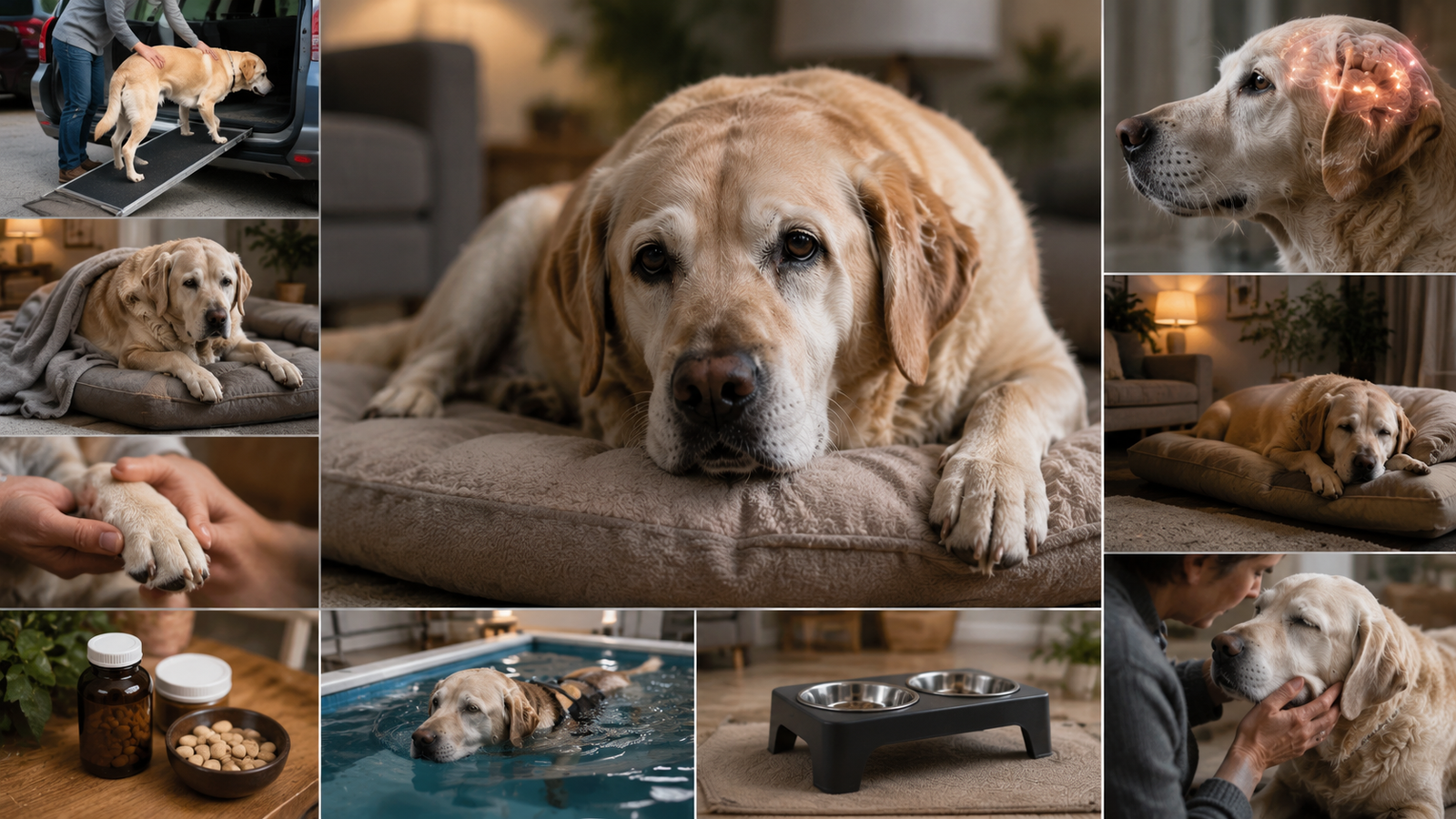
There is a quiet, profound beauty that settles into a Labrador Retriever during their golden years. The hyperactive puppy energy that once defined them softens into something deeply comforting. The boisterous dog who used to pull frantically on the leash is replaced by a gentle companion who matches your pace perfectly, content just to rest their head on your knee.
But watching that iconic muzzle slowly turn frosty white brings a delicate shift in our roles as owners.
Our dogs spend their entire youth looking after us. When they become seniors, it is our privilege to return the favor.
Caring for a senior Labrador requires more than just buying a softer dog bed or adding a splash of warm water to their kibble. Because of their large skeletal frame, genetic vulnerabilities to joint disease, and deep-seated love for food, aging Labradors have highly specific physiological needs.
This guide provides an evidence-based roadmap for managing your older Labrador’s health. We will cover advanced pain management, metabolic adjustments, mental preservation, and environmental setups designed to give your best friend the comfortable, dignified retirement they deserve.
The Aging Timeline: When Does a Labrador Become a Senior?
Because of their physical size and metabolic rate, Labradors age more rapidly than smaller dog breeds.
The Senior Threshold: In the veterinary world, a Labrador Retriever is officially classified as a senior dog when they reach 7 to 8 years of age.
By this point, cellular renewal begins to slow down, the immune system becomes less resilient, and chronic internal changes—such as micro-wear on joint cartilage—begin to surface. When your Lab crosses this threshold, their risk for age-related conditions climbs significantly.
| Age Range | Classification | Primary Veterinary Focus |
| 0 to 6 Years | Adult | Preventive health, baseline fitness, weight management. |
| 7 to 10 Years | Senior | Early organ screening, structural joint preservation. |
| 11+ Years | Geriatric | Advanced pain management, cognitive protection, palliative comfort. |
4 Essential Pillars of Senior Labrador Care
Helping an aging Labrador thrive requires a multi-pronged approach. By focusing on these four pillars, you can directly preserve their mobility, comfort, and cognitive clarity.
1. Joint Health and Advanced Mobility Management
Osteoarthritis is the most common chronic condition affecting senior Labradors. Decades of enthusiastic fetching, swimming, and running place a heavy burden on their hips, elbows, and knees.
Recognize Hidden Pain Signals
Dogs are evolutionarily hardwired to mask physical vulnerability. A senior Lab won’t necessarily cry out or whimper when their joints ache. Instead, look for these subtle behavioral flags:
- Hesitating before climbing stairs or jumping into the car.
- Licking or chewing at specific joints, particularly the wrists (carpus).
- Slowing down significantly during the second half of a walk.
- A “bunny-hopping” gait where both hind legs move together.
The Multi-Modal Pain Strategy
Modern veterinary medicine treats arthritis using a multi-modal approach—combining multiple low-dose therapies to create a powerful synergistic effect without overloading any single organ system.
Work with your veterinarian to design a plan that pairs prescription anti-inflammatories or cutting-edge monoclonal antibody injections (like Librela) with high-potency joint supplements containing Glucosamine, Chondroitin, and Green-Lipped Mussel.
2. Metabolic Shifts: Calorie Restriction vs. High-Quality Protein
As a Labrador’s activity levels drop, their metabolic rate slows by roughly 10% to 15%. If you keep feeding them the same amount of food they ate during their high-energy youth, they will quickly gain weight.
Extra weight is incredibly hard on arthritic joints. Every additional pound puts extra strain on inflamed cartilage, accelerating joint damage.
- The Protein Fallacy: Many owners mistakenly believe that senior dogs need low-protein diets to protect their kidneys. Unless your dog has been diagnosed with advanced kidney failure, senior Labradors actually need higher levels of highly digestible animal protein.
- Prevent Sarcopenia: As dogs age, their bodies become less efficient at processing amino acids, leading to sarcopenia (muscle wasting). To keep their muscles strong enough to support their joints, feed a senior-formulated diet rich in lean proteins (like chicken, turkey, or fish) while keeping overall fat and calories low.
3. Cognitive Enrichment: Fighting Canine Dementia
Canine Cognitive Dysfunction (CCD) mimics human Alzheimer’s disease. Brain tissue can accumulate beta-amyloid plaques over time, leading to cognitive decline.
Watch for the signs of CCD:
- Wandering aimlessly or getting trapped behind doors or in corners.
- Waking up in the middle of the night, pacing, or barking anxiously.
- Forgetting basic house-training rules.
Preserve Their Brain Power
Keep your senior Lab’s mind sharp by keeping their brain active. Introduce gentle mental stimulation every day. Use snuffle mats for their meals, hide high-value treats around the living room for a low-impact sniffing game, and continue teaching them simple, low-effort commands. Sensory stimulation encourages neuroplasticity, helping to keep dementia at bay.
4. Environmental Modification for Safety and Dignity
Your home layout can become a challenging obstacle course for a dog with limited mobility or fading vision. Simple, thoughtful changes to their environment can make a world of difference.
Upgrade Their Home Environment:
- Lay Down Non-Slip Runner Rugs: Slick hardwood, tile, or laminate floors are incredibly treacherous for arthritic paws. Laying down rubber-backed runner rugs along your Lab’s favorite indoor paths gives them the traction they need to stand and walk confidently.
- Invest in True Orthopedic Bedding: Avoid cheap, fiber-filled dog beds that flatten out completely under a heavy dog. Your senior Lab needs a bed made of high-density, therapeutic memory foam that supports their heavy frame, cushions their joints, and helps prevent painful pressure sores (hygromas) on their elbows.
- Elevate Food and Water Bowls: Raising their dishes slightly helps reduce strain on an aching neck and spine while they eat.
The Senior Labrador Healthcare Timeline
To stay on top of your aging Labrador’s changing health needs, follow this proactive preventive veterinary schedule:
1.Comprehensive Physical & Mobility Evaluation:Frequency: Every 6 Months.
Schedule veterinary exams twice a year to check for muscle wasting, track subtle joint changes, and adjust pain management protocols as needed.
2.Senior Blood Panel & Urinalysis:Frequency: Annually (Ages 7-10) / Every 6 Months (Ages 11+).
Run a full chemistry profile, complete blood count, and SDMA kidney test to evaluate liver, kidney, and metabolic function well before physical symptoms of illness appear.
3.Advanced Diagnostic Imaging:Frequency: Professional Assessment as Needed.
Utilize digital spinal or hip x-rays to map the progression of osteoarthritis, allowing for targeted physical therapy or therapeutic laser treatments.
Frequently Asked Questions (FAQ)
How can I tell the difference between normal aging and pain in my Labrador?
Slowed movement is often misattributed to a dog simply “getting older.” In reality, slowing down is almost always a direct reflection of physical pain or joint discomfort. If your senior Labrador hesitates before climbing stairs, struggles to stand up after sleeping, or exhibits a stiff gait that improves slightly as they warm up, they are experiencing arthritis-related pain that can be managed medically.
What are the best low-impact exercises for an older Labrador?
Swimming is the gold standard exercise for senior Labradors. It leverages their natural aquatic instincts while providing an excellent cardiovascular workout that is completely non-weight-bearing, taking all pressure off their joints. If swimming isn’t an option, take brief, controlled 10-to-15-minute walks on soft, level surfaces like grass or packed dirt, avoiding steep hills or sudden, explosive fetches.
Why is my senior Labrador suddenly drinking significantly more water?
An abrupt, noticeable increase in water consumption (polydipsia) is an important warning sign that should never be ignored. In senior Labradors, excessive thirst is a primary symptom of several common underlying medical conditions, including chronic kidney disease, diabetes mellitus, or Cushing’s disease (hyperadrenocorticism). Schedule a veterinary blood panel and urinalysis to pinpoint the exact cause.
Conclusion: Making Every Moment Count
Caring for a senior Labrador is a deeply rewarding experience. While it requires us to slow down, pay closer attention to detail, and adapt our daily routines, the deep connection you share with your older dog makes it all worth it. By managing their weight, keeping them moving comfortably, and keeping their mind active, you can ensure their senior years are filled with comfort, happiness, and peace.
What changes have you noticed in your senior Labrador recently, and how are you modifying their routine? Share your experiences or questions in the comments below—we’d love to connect and offer tips for your dog’s golden years!