
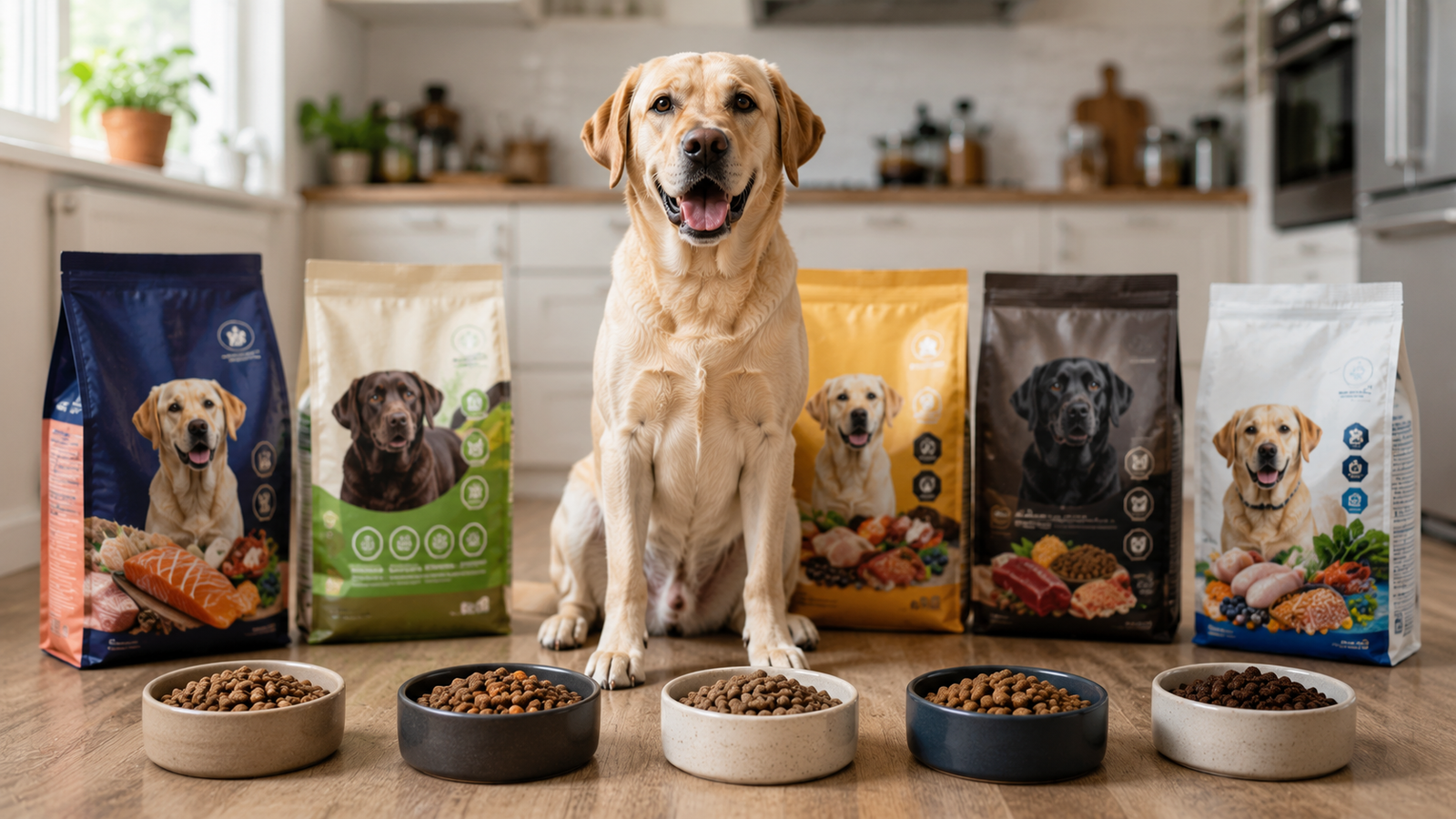
There is a unique kind of joy in watching a Labrador Retriever eat. They don’t just casually nibble their food; they approach the food bowl with an explosive, tail-wagging enthusiasm that makes it feel like the best moment of their entire day.
But as a Labrador owner, that legendary appetite can feel like a double-edged sword.
Behind those eager, begging brown eyes lies a complex anatomical structure and a highly specific genetic profile. Because Labradors are highly prone to rapid weight gain, developmental joint conditions, and sudden digestive emergencies like bloat, what you choose to put into their bowl is one of the most critical health decisions you will make.
Feeding a Labrador isn’t as simple as choosing a random bag of large-breed kibble off the pet store shelf. It requires finding a precise balance: high-quality protein to maintain lean muscle mass, strict calorie management to protect vulnerable joints, and advanced quality control standards that ensure long-term health.
To help you cut through the marketing noise, this data-driven guide evaluates the 5 best dog foods for Labrador Retrievers. These top selections are based on nutrient bioavailability, joint-supporting additives, and compliance with strict global veterinary standards.
3 Pillars of Labrador Retriever Nutrition
Before highlighting individual foods, it is important to understand the three specific dietary demands that define Labrador health:
I. Controlled Calcium-to-Phosphorus Ratios
Because Labradors are a fast-growing large breed, a rapid growth spike during puppyhood can weaken their skeletal development, leading to hip and elbow dysplasia. Large breed puppy formulas must maintain a precise calcium-to-phosphorus ratio (ideally around 1.2:1 to 1.3:1) to ensure bones grow at a safe, steady pace.
II. L-Carnitine and Strict Fat-to-Protein Ratios
Many Labradors carry a genetic mutation in their POMC gene, which essentially turns off their brain’s internal signal that they are full.
To prevent obesity, their diet requires high levels of bioavailable animal protein to support lean muscle tissue, paired with lower, controlled fat percentages. Look for ingredients like L-Carnitine, a vital amino acid derivative that actively helps the body metabolize fats into usable energy.
III. The WSAVA and AAFCO Quality Standard
The global standard for animal nutrition is guided by the World Small Animal Veterinary Association (WSAVA) and the Association of American Feed Control Officials (AAFCO).
The Snippet Answer: The best dog food for a Labrador Retriever must feature an AAFCO Nutritional Adequacy Statement confirming it is complete and balanced. Additionally, the manufacturer should adhere to WSAVA guidelines, meaning they employ full-time veterinary nutritionists and conduct rigorous feeding trials rather than relying on basic ingredient list marketing.
The 5 Best Dog Foods for Labrador Retrievers
1. Royal Canin Breed Health Nutrition Labrador Retriever Adult
Best Breed-Specific Formulation
Royal Canin takes a targeted approach by designing their kibble specifically around the physical shape and genetic tendencies of the Labrador Retriever.
- Why It Wins for Labs: This recipe features a distinct, ring-shaped kibble. This donut shape is mechanically engineered to slow down fast eaters, forcing your Lab to bite and chew their food. This simple design directly helps reduce the risk of swallowing air, which can lead to bloat.
- Key Nutritional Details: It contains a tailored calorie content to help your Lab maintain an ideal weight, alongside enriched levels of EPA, DHA, and glucosamine to provide essential structural support for their hardworking joints.
2. Purina Pro Plan Adult Large Breed Sensitive Skin & Stomach Salmon & Rice
Best for Digestion and Coat Health
Purina Pro Plan is widely trusted by veterinarians, canine athletes, and professional breeders worldwide due to the brand’s extensive clinical testing and scientific research.
- Why It Wins for Labs: Labradors are prone to food sensitivities that can show up as chronic ear infections, hot spots, or loose stools. This formula uses real salmon as the primary protein source and easily digestible oat meal and rice, completely bypassing common triggers like corn, wheat, and soy.
- Key Nutritional Details: It provides a rich, natural source of Omega-6 fatty acids and Vitamin A to nourish their dense double coat, while added glucosamine keeps their joints moving comfortably.
3. Hill’s Science Diet Adult Large Breed Light Weight Management
Best for Weight Control and Calorie Precision
When a Labrador needs to shed a few pounds to protect their joints, Hill’s Science Diet Light provides an expertly balanced solution that manages calories without sacrificing vital nutrition.
- Why It Wins for Labs: This food is formulated with 18% fewer calories than the standard Hill’s Large Breed adult recipe. It uses natural vegetable fibers to add healthy bulk to the food, satisfying your Lab’s instinctual urge to eat a full meal while preventing them from gaining weight.
- Key Nutritional Details: It is fortified with L-Carnitine to help their body efficiently burn fat and convert it into lean muscle energy, keeping your Lab light on their feet.
4. Purina Pro Plan Sport Performance 30/20 High Protein
Best for Working and Highly Active Labradors
If you have a working field-line Labrador, an agility competitor, or a hunting companion who spends hours running and swimming, their energy needs are vastly different from a typical family pet.
- Why It Wins for Labs: This formula features a precise, concentrated ratio of 30% protein and 20% fat. This specific balance helps maintain lean muscle mass and provides sustained, long-burning energy for highly active dogs.
- Key Nutritional Details: It contains specialized amino acid blends that help muscles recover quickly after intense physical exercise, paired with robust levels of EPA and marine Omega-3 fatty acids to protect their joints from repetitive high-impact stress.
5. JustFoodForDogs Fish & Sweet Potato Fresh Lifestyle Diet
Best Premium Fresh Whole-Food Pick
For owners looking to move away from traditional hard kibble, fresh, gently cooked whole food offers exceptional nutrient bioavailability.
- Why It Wins for Labs: JustFoodForDogs uses strictly human-grade ingredients prepared in open kitchens. The Fish & Sweet Potato recipe is low in fat and calorie-controlled, making it an excellent match for a Labrador’s metabolism. Because the food is minimally processed, the nutrients retain their natural form, making them incredibly easy for your dog’s body to digest.
- Key Nutritional Details: This single-protein, grain-free recipe features wild-caught Pacific cod, which provides a clean source of lean protein and is naturally rich in anti-inflammatory Omega fatty acids.
Nutritional Comparison at a Glance
To see how these top options stack up based on your Labrador’s specific lifestyle and health needs, review the quick-reference breakdown below:
| Brand | Primary Benefit | Top Protein Source | Best Suited For |
| Royal Canin Breed Nutrition | Slows down fast eating | Chicken By-Product Meal | Fast eaters prone to air gulping |
| Purina Pro Plan Sensitive | Soothes skin and stomach | Real Salmon | Labs with allergies or ear infections |
| Hill’s Science Diet Light | Weight management | Real Chicken | Overweight or low-activity Labs |
| Purina Pro Plan Sport | Sustained stamina | Real Chicken | Working, hunting, or athletic Labs |
| JustFoodForDogs Fresh | Maximum nutrient absorption | Wild-Caught Cod | Dogs needing premium, whole-food nutrition |
Frequently Asked Questions (FAQ)
Is a grain-free diet safe for a Labrador Retriever?
Unless your Labrador has been explicitly diagnosed with a specific grain allergy by a veterinary dermatologist, grain-free diets are generally not recommended. The FDA has investigated a potential link between grain-free dog foods—specifically those that replace grains with high concentrations of peas, lentils, or chickpeas—and the development of Canine Dilated Cardiomyopathy (DCM), a serious heart condition. For large breeds like Labradors, choosing a diet that includes healthy, wholesome grains like oatmeal, brown rice, and barley is typically the safest approach.
How much should I feed my adult Labrador Retriever each day?
There is no universal cup measurement because every dog’s metabolism, age, and activity level are completely unique. A sedentary 75-pound companion requires far fewer daily calories than a 75-pound working field Lab. Always use the feeding chart on your specific food bag as a starting point. From there, adjust the portions up or down to ensure your dog maintains an ideal Body Condition Score of 4 or 5 out of 9, where you can easily feel their ribs without a thick layer of fat covering them.
What ingredients should I actively avoid when buying Labrador food?
Avoid foods that rely heavily on vague, unnamed animal ingredients (such as “meat meal” or “animal fat”) rather than clearly specified sources like “chicken meal” or “beef fat.” You should also avoid artificial preservatives like BHA, BHT, and ethoxyquin. Finally, stay away from foods that feature a high concentration of cheap fillers or use ingredient splitting (listing multiple variations of corn or wheat sequentially) to mask the true amount of carbohydrates in the recipe.
Conclusion: Fueling a Long, Vibrant Life
Your Labrador Retriever’s food bowl is the foundation of their long-term health. By choosing a diet that directly addresses their unique physical traits—whether that means managing their weight with a light kibble, protecting their joints with marine Omegas, or slowing down their eating with a specialized kibble shape—you are actively investing in more high-quality years together.
Ditch the generic, all-purpose foods. Choose a high-quality, scientifically backed formula that suits your Lab’s specific age, weight, and activity level. Your best friend will thank you with boundless energy, a gleaming coat, and a lifetime of devotion.
What type of food is your Labrador eating right now, and how do you manage their appetite? Share your experiences or ask a question in the comments below!