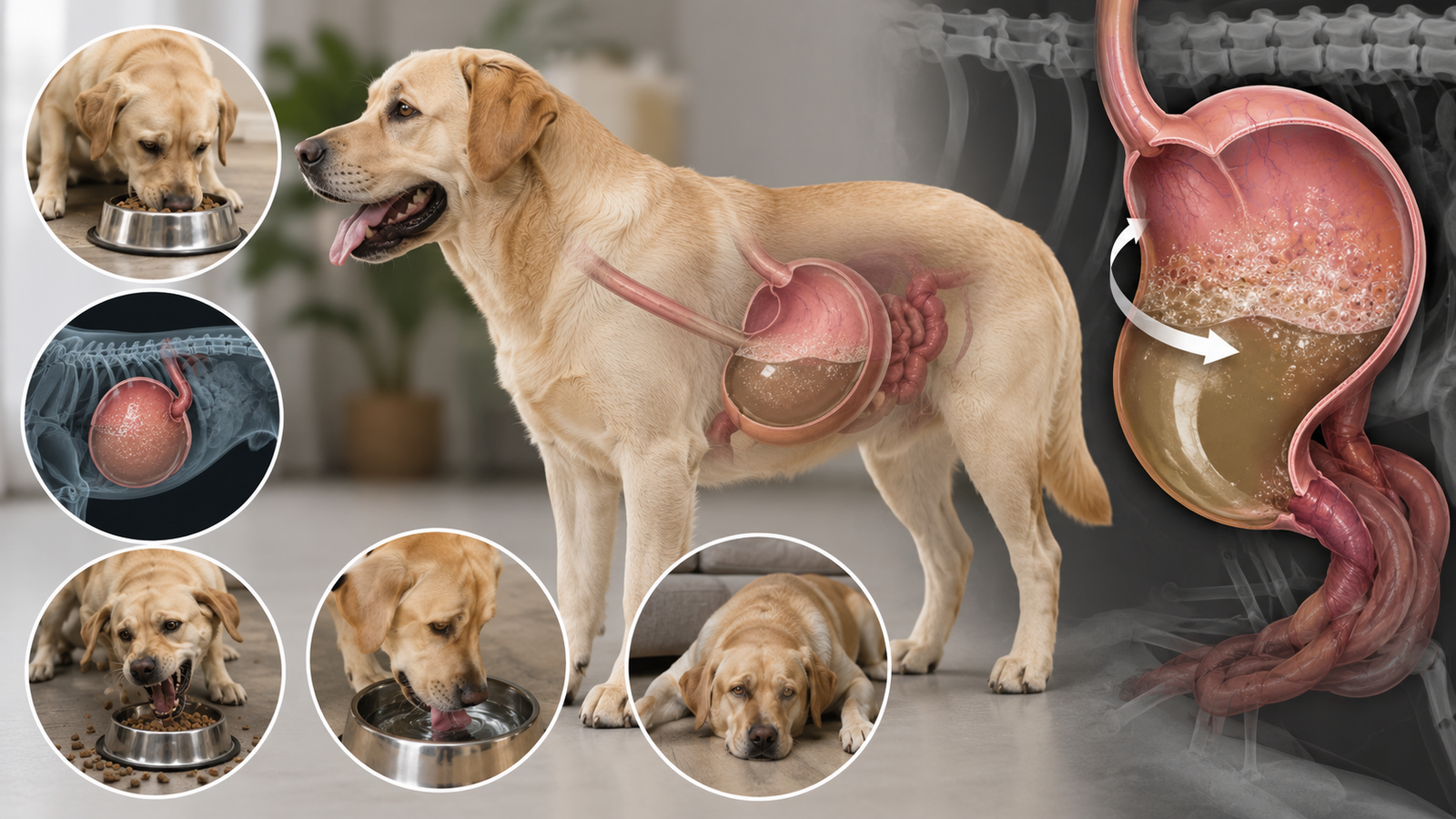
Imagine this: It’s a beautiful evening, and your Labrador Retriever has just devoured their dinner with their usual, enthusiastic appetite. They head out into the backyard to chase a tennis ball, tail wagging, full of joy. But within an hour, the mood completely changes.
Your dog is suddenly pacing restlessly. They try to vomit, but nothing comes up except a bit of white foam. Their abdomen looks taut and swollen, like a tightly wound drum, and they look up at you with panicked, pleading eyes.
This is the terrifying reality of Gastric Dilatational-Volvulus (GDV), commonly known as bloat.
For Labrador owners, this isn’t just a hypothetical scenario—it is an ever-present veterinary emergency. Bloat is a rapid, catastrophic condition where a dog’s stomach fills with gas and twists on its own axis, cutting off local blood supply. Without immediate emergency intervention, GDV can turn fatal in less than two hours.
But why does this happen? What makes America’s most popular, friendly breed so uniquely vulnerable to this sudden internal crisis?
The answer lies in a volatile mix of skeletal anatomy, evolutionary genetics, and behavioral habits. Let’s explore the exact science behind why Labradors are prone to bloat, the warning signs every owner must memorize, and the preventative measures that can save your dog’s life.
What is Bloat? The Anatomy of a Medical Crisis
To understand why Labradors are specifically targeted, we must first analyze the two distinct stages of this life-threatening medical emergency.
- Gastric Dilatation (The Bloat Stage): The stomach fills rapidly with accumulated gas, fluid, or food. The stomach expands significantly, putting extreme pressure on the diaphragm and making it difficult for the dog to breathe.
- Volvulus (The Torsion Stage): The heavy, distended stomach becomes unstable. As the dog moves, the stomach rotates along its longitudinal axis—often between 180° to 360°. This twist completely seals the entrance (esophagus) and exit (duodenum), trapping everything inside.
When the stomach twists, it behaves like a kinked garden hose. Crucially, it compresses the vena cava—the large vein that returns blood from the lower body back to the heart.
This compression causes systemic blood pressure to plummet, sending the dog into a state of severe cardiovascular shock. At the same time, the trapped stomach lining loses blood flow and begins to necrose (die off), releasing dangerous toxins directly into the bloodstream.
4 Critical Factors: Why Are Labradors Prone to Bloat?
While giant breeds like Great Danes and Standard Poodles carry the highest statistical risk for GDV, Labradors consistently rank among the most frequently affected medium-to-large breeds. This vulnerability is driven by four primary underlying factors:
1. The Deep-Chested Anatomical Blueprint
The primary physical risk factor for bloat is a dog’s chest-to-waist ratio. Breeds characterized as “deep-chested and narrow-waisted” have a large, deep thoracic cavity.
- The Internal Space Trap: A Labrador’s rib cage is long and deep, leaving a relatively large amount of open space within the upper abdomen.
- The Pendulum Effect: Because the stomach is suspended by flexible ligaments inside this deep cavity rather than sitting snugly against other organs, a full, heavy stomach can act like a pendulum. If the dog runs or twists, that weight can easily swing and flip the stomach over.
2. The Labrador “Food Obsession” (The POMC Mutation)
Anyone who has ever lived with a Labrador knows their appetite is legendary. They don’t just eat food; they inhale it. This ravenous behavior is actually driven by genetics.
A significant percentage of Labradors carry a specific mutation in the POMC (pro-opiomelanocortin) gene, which is responsible for regulating hunger. This genetic mutation prevents their brains from receiving the signal that they are full, leaving them in a permanent state of perceived starvation.
- Aerophagia (Swallowing Air): Because their brains tell them to eat as fast as possible, Labradors gulp large amounts of air alongside their food. This air accumulation instantly primes the stomach for severe dilatation.
- The Heavy Fluid Load: Gulping a large volume of dry kibble in under 60 seconds causes the food to absorb gastric juices all at once, creating a dense, heavy mass that sits at the bottom of the stomach, increasing pendulum-like instability.
3. Laxity in Gastric Ligaments as Labs Age
As Labradors grow older, their internal tissues naturally lose elasticity. The hepatogastric and hepatoduodenal ligaments—the internal connective cords that anchor the stomach to the abdominal wall—stretch out over time. This increased looseness allows the stomach to shift more freely, explaining why the risk for a life-threatening twist spikes significantly after a Labrador turns 7 years old.
4. Stress, Anxiety, and Nervous Temperaments
Epidemiological studies conducted by the Purdue University College of Veterinary Medicine revealed that a dog’s personality directly influences their risk of bloat. Labradors that are highly anxious, fearful, or hyper-reactive have a 2.57 times higher risk of developing GDV than calm, relaxed dogs. Stress alters normal gastrointestinal motility and increases air-gulping behaviors, creating the perfect physiological storm for a twist.
Recognizing the Early Warning Signs of Bloat
Because GDV progresses with terrifying speed, knowing how to spot the early warning signs can mean the difference between life and death. If your Labrador shows any combination of the following symptoms, call an emergency vet immediately:
- Unproductive Vomiting: The dog repeatedly tries to vomit or retch, but only expels strings of thick, clear, or white foamy saliva. This occurs because the physical twist has sealed the stomach shut.
- Distended, Hard Abdomen: The belly behind the ribs appears visibly swollen or taut. If you gently tap it with your fingers, it may feel firm and sound hollow, like a drum.
- Extreme Restlessness and Pacing: The dog cannot get comfortable. They will pace, whine, stand with their legs spread wide, or repeatedly sit down and stand back up.
- Hypersalvation: Profuse drooling and lip-smacking, driven by nausea and the physical inability to swallow saliva past the esophageal blockage.
- Pale or Muddy Gums: If you lift your Lab’s lip, their gums may look pale pink, white, or gray, indicating that blood circulation is failing and the dog is entering shock.
5 Life-Saving Tactics to Prevent Bloat in Labradors
While you cannot change your Labrador’s deep-chested anatomy or their genetic hunger drives, you can implement concrete, evidence-based management habits to drastically reduce their risk of bloat.
1. Ditch the Standard Bowl: Force a Slower Pace
Never feed your Labrador out of a standard, open dog bowl. You must mechanically disrupt their ability to gulp down food and air.
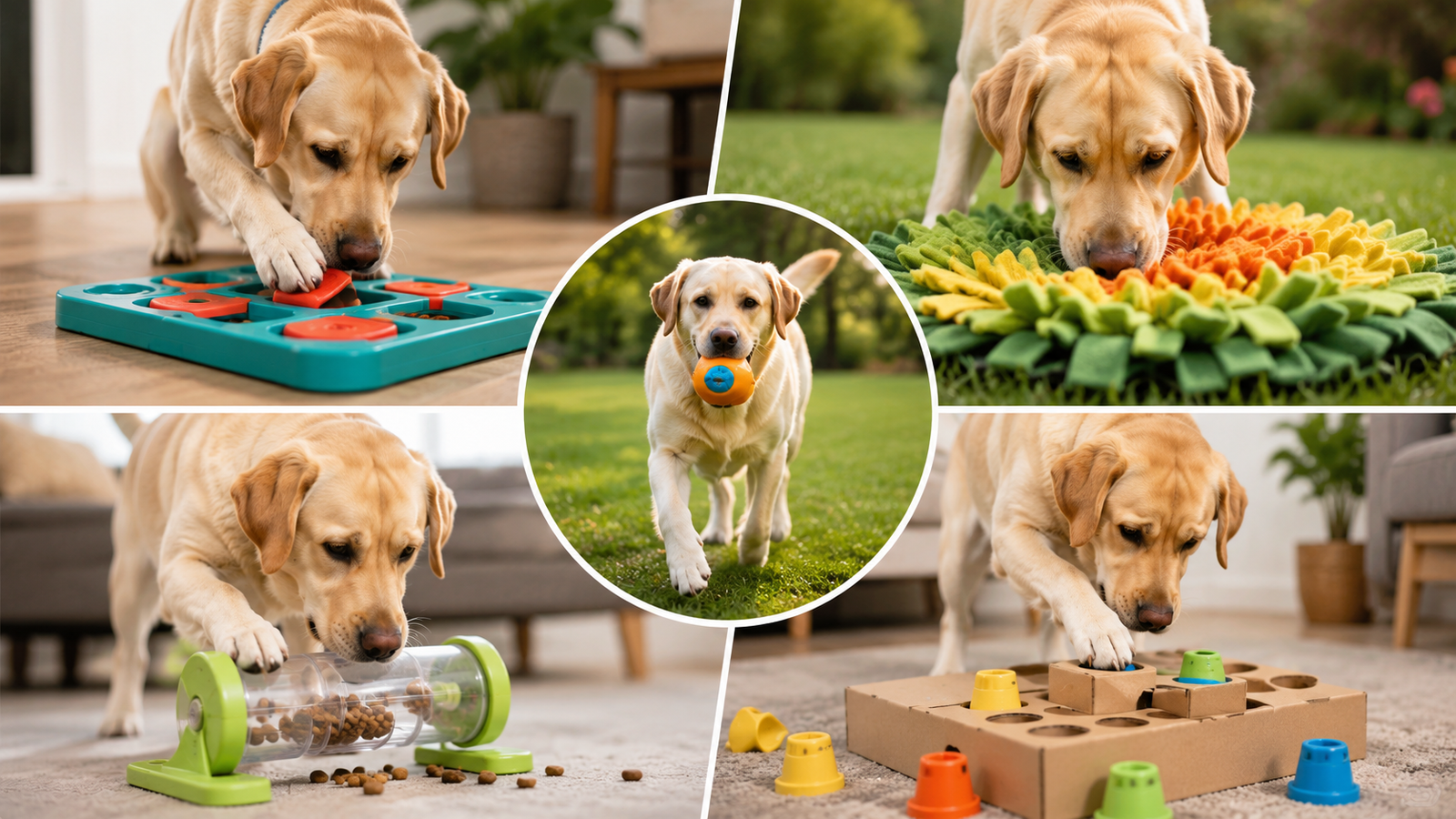
- The Solution: Use advanced maze-style slow feeder bowls, heavy puzzle toys, or snuffle mats.
- The Feeding Routine: Divide their daily food allowance into two or three smaller meals spaced throughout the day instead of offering one large daily feeding. Loading a deep chest with a massive volume of food at once is a primary trigger for gastric rotation.
2. Enforce the “Golden Hour” Rest Rule
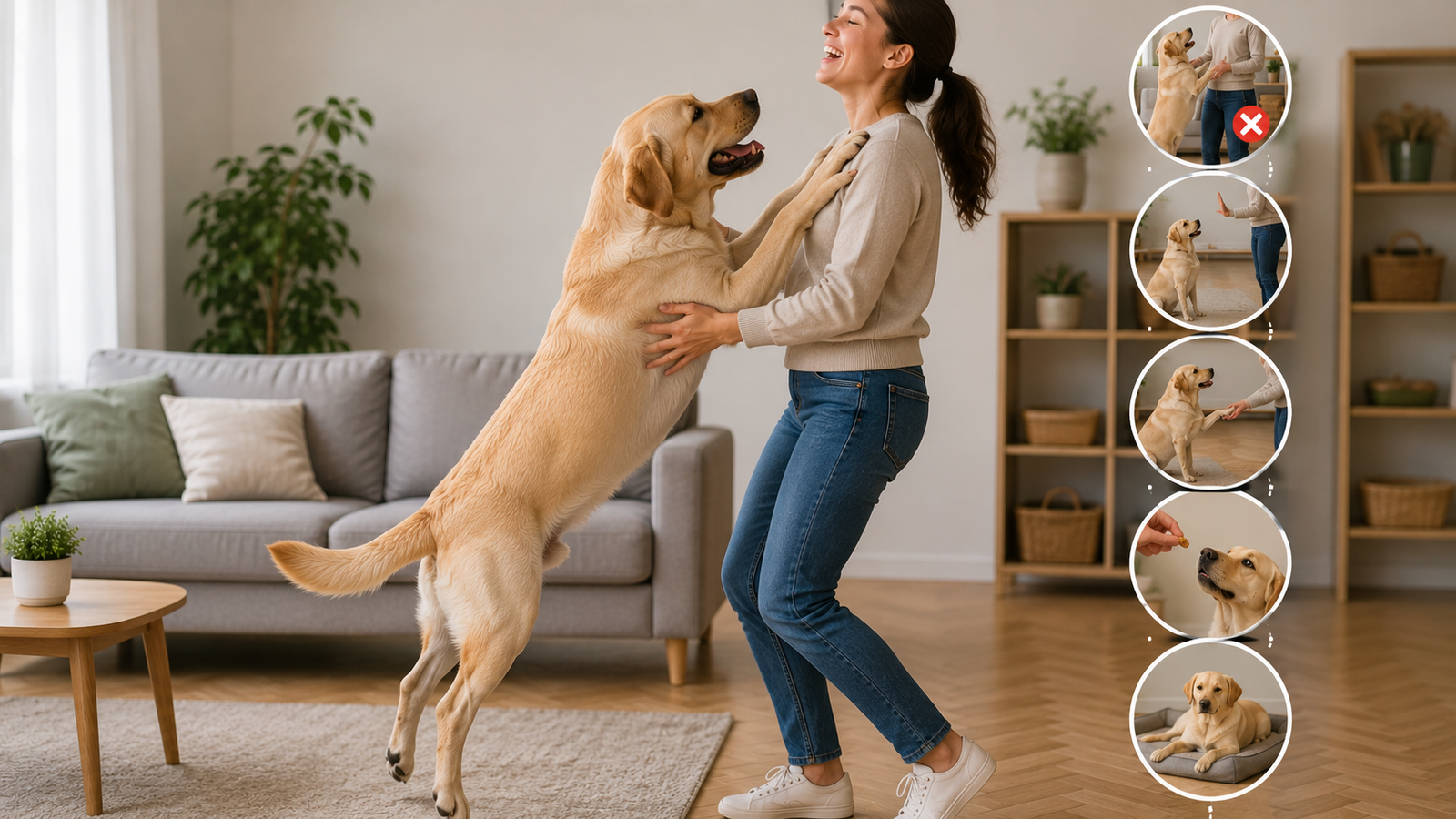
Never allow your Labrador to engage in rigorous exercise, running, fetching, or rough play for one hour before and at least two hours after eating a meal.
This strict rest window ensures the stomach has broken down the main mass of food and partially emptied into the small intestine, eliminating the heavy “pendulum mass” that can swing and cause a twist during active play.
3. Avoid Elevated Food Bowls
For years, traditional advice suggested that elevating food bowls was better for a large dog’s joints and digestion. However, extensive veterinary tracking data has turned this theory on its head.
The Data: Studies show that feeding from an elevated bowl actually increases the risk of bloat by over 110% in large breeds. Elevated bowls alter the natural swallowing angle, causing dogs to ingest far more ambient air with each bite. Always feed your Labrador from a bowl placed flat on the floor.
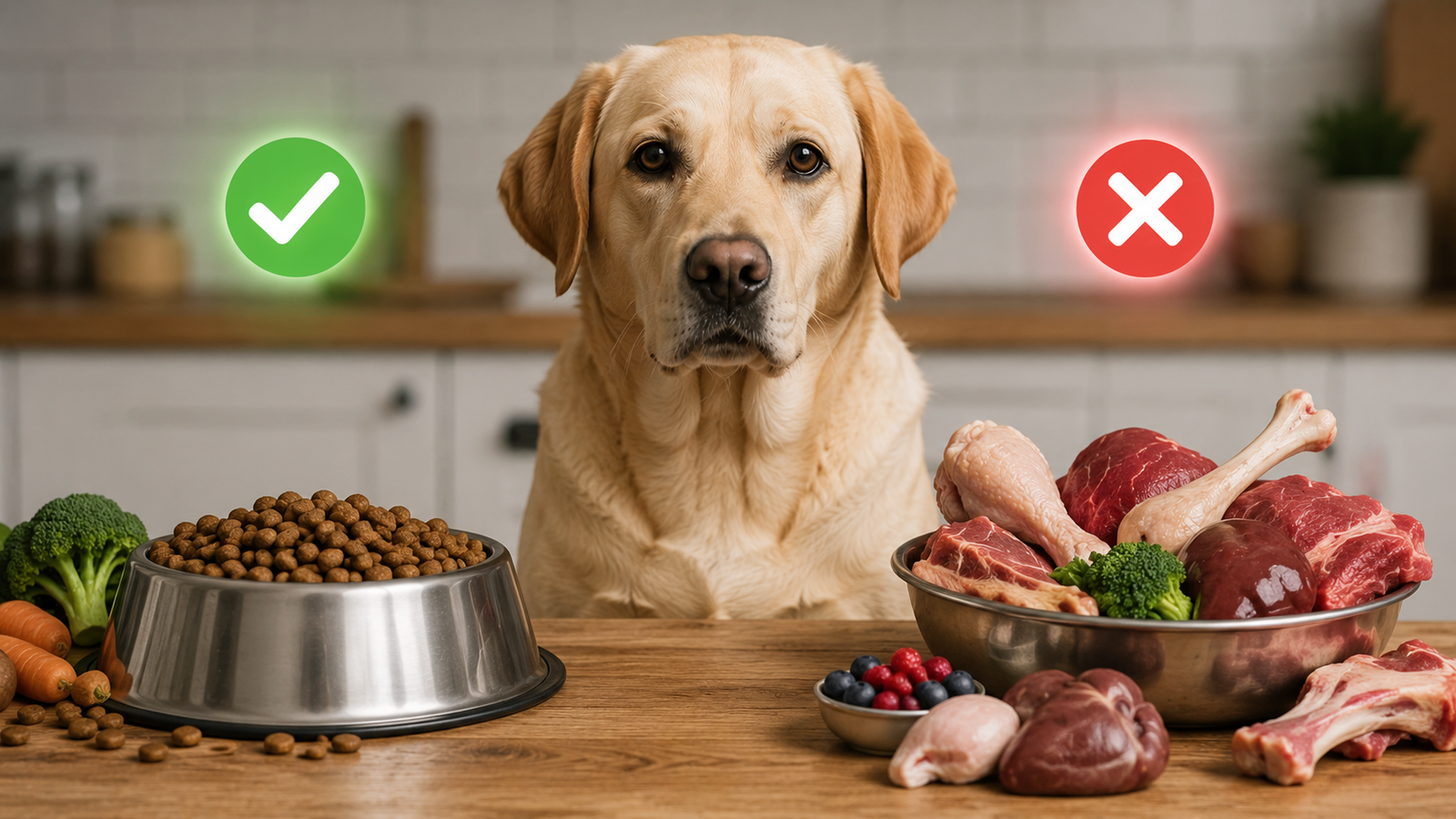
4. Review Your Kibble Recipe and Ingredients
Take a close look at the ingredient list on your Labrador’s dry food bag.
- What to Avoid: Avoid kibbles where an animal fat or oil (such as “chicken fat”) is listed within the first four ingredients. High fat coatings can slow down gastric emptying, keeping food in the stomach longer.
- The Water Rule: Additionally, avoid pre-moistening dry kibble if it contains citric acid as a preservative, as this can trigger rapid gas production in the bowl.
5. Consider a Preventative Gastropexy Surgery
If your Labrador has a close relative (parent or sibling) who suffered from bloat, their genetic risk increases exponentially. In these cases, talk to your veterinarian about a preventative gastropexy.
This minor, highly effective procedure can often be performed laparoscopically or alongside a routine spay/neuter surgery. The surgeon permanently tacks the outer wall of the stomach to the abdominal wall. While this doesn’t prevent the stomach from filling with gas, it permanently prevents the stomach from twisting, turning a fatal emergency into a highly treatable issue.
Quick Reference: Bloat Prevention Cheat Sheet
| Myth | Scientific Reality | Life-Saving Action |
| “Elevated bowls prevent bloat.” | Elevated feeding angles actually double air ingestion. | Feed flat on the floor. |
| “One large meal a day is fine.” | Large food volumes stretch ligaments and trap gas. | Split into 2–3 smaller meals. |
| “Post-meal exercise builds muscle.” | Running with a full stomach causes immediate twisting. | Enforce a strict 2-hour rest. |
Frequently Asked Questions (FAQ)
How much does emergency treatment for a twisted stomach cost?
Because GDV requires intensive, immediate surgical intervention, stabilizing therapy, and around-the-clock intensive care, emergency surgery costs usually range from $3,000 to $7,000+, depending on your location and how much stomach tissue was damaged. This financial reality highlights the value of proactive pet insurance or looking into a preventative gastropexy.
Can a Labrador experience bloat without the stomach actually twisting?
Yes. This condition is called Gastric Dilatation (or “food bloat”). The stomach fills with an unsafe amount of gas or expanding food but doesn’t flip. While still a painful veterinary emergency that requires medical decompression, it is far less immediate and lethal than Gastric Dilatation-Volvulus (GDV), where the stomach twists and cuts off vital blood flow.
Is giving Gas-X (Simethicone) effective during an active bloat emergency?
While simethicone can help break down small gas bubbles in a standard upset stomach, it cannot fix or undo a physically twisted stomach. If your Labrador is experiencing true GDV, giving oral medications is largely ineffective because the esophagus is completely sealed shut. Do not lose precious time looking for home remedies; drive straight to an emergency veterinary hospital.
Conclusion: Awareness Saves Lives
The anatomical and genetic factors that make Labradors prone to bloat are simply part of the breed we love. However, armed with the right knowledge, you hold the power to protect them from this hidden danger. By making simple adjustments to how and when your Labrador eats, stays active, and rests, you can keep their stomach safe and secure.
Keep a close eye on their post-meal behavior, ditch the elevated bowls, and ensure they take it easy after dinner. Your proactive care is their best shield against this sudden crisis.
Does your Labrador eat their food too quickly, and what steps have you taken to slow them down? Let us know your favorite slow-feeding strategies in the comments below!