You love your Labrador Retriever. You love their unwavering loyalty, their goofy smile, and their boundless enthusiasm for a simple game of fetch. What you don’t love is finding a layer of short, coarse dog hair on your freshly vacuumed rug, your favorite black velvet jacket, and—somehow—inside your morning cup of coffee.
There is an old joke among Lab owners: “Labradors only shed twice a year—from January to June, and from July to December.”
Because of their deceptively short coats, many first-time owners are shocked to realize that Labradors are among the heaviest shedders in the canine world. Without a proactive strategy, your home will quickly become a permanent holding ground for dog hair tumbleweeds.
You cannot stop a healthy Labrador from shedding entirely—it is a vital biological function. However, you can control it.
This masterclass manual provides a comprehensive, science-backed framework on how to manage Labrador shedding, featuring advanced grooming tools, specific nutritional building blocks, and highly effective bathing tactics to keep the hair on your dog and off your furniture.
The Biology of the Lab Coat: Why Do They Shed So Much?
To control the hair storm, you must understand what you are up against. Labradors possess a specialized double coat engineered to protect them from icy water and harsh weather conditions:
- The Guard Layer (Topcoat): The visible outer coat is straight, thick, and relatively coarse. It is packed with natural oils that repel water, dirt, and debris.
- The Insulating Layer (Undercoat): Beneath the topcoat lies a dense, soft, downy layer of secondary hairs. This undercoat acts like high-grade thermal insulation, trapping warm air against the skin in the winter and shielding them from heat in the summer.
Decoding “Blow Coat” Season
While Labradors shed a moderate, steady amount of hair every single day, they undergo a massive hormonal and environmental shift twice a year known as blowing their coat.
Triggered by changes in daylight hours rather than temperature, your Lab will completely shed out their undercoat over a period of 3 to 6 weeks. This usually happens in the spring (shedding the heavy winter undercoat for a lighter summer layer) and the fall (swapping the summer coat for a thick winter shield). During these peak cycles, the volume of loose hair increases exponentially.
The Three-Brush System: Your Arsenal for Undercoat Removal
Many owners fail to manage Labrador shedding because they use the wrong tools. Brushing the surface with a standard human hairbrush or a generic bristle brush only glosses over the topcoat, leaving the dead, detached undercoat trapped beneath. Over time, this trapped fur mats, prevents air circulation, and causes itchy skin hot spots.
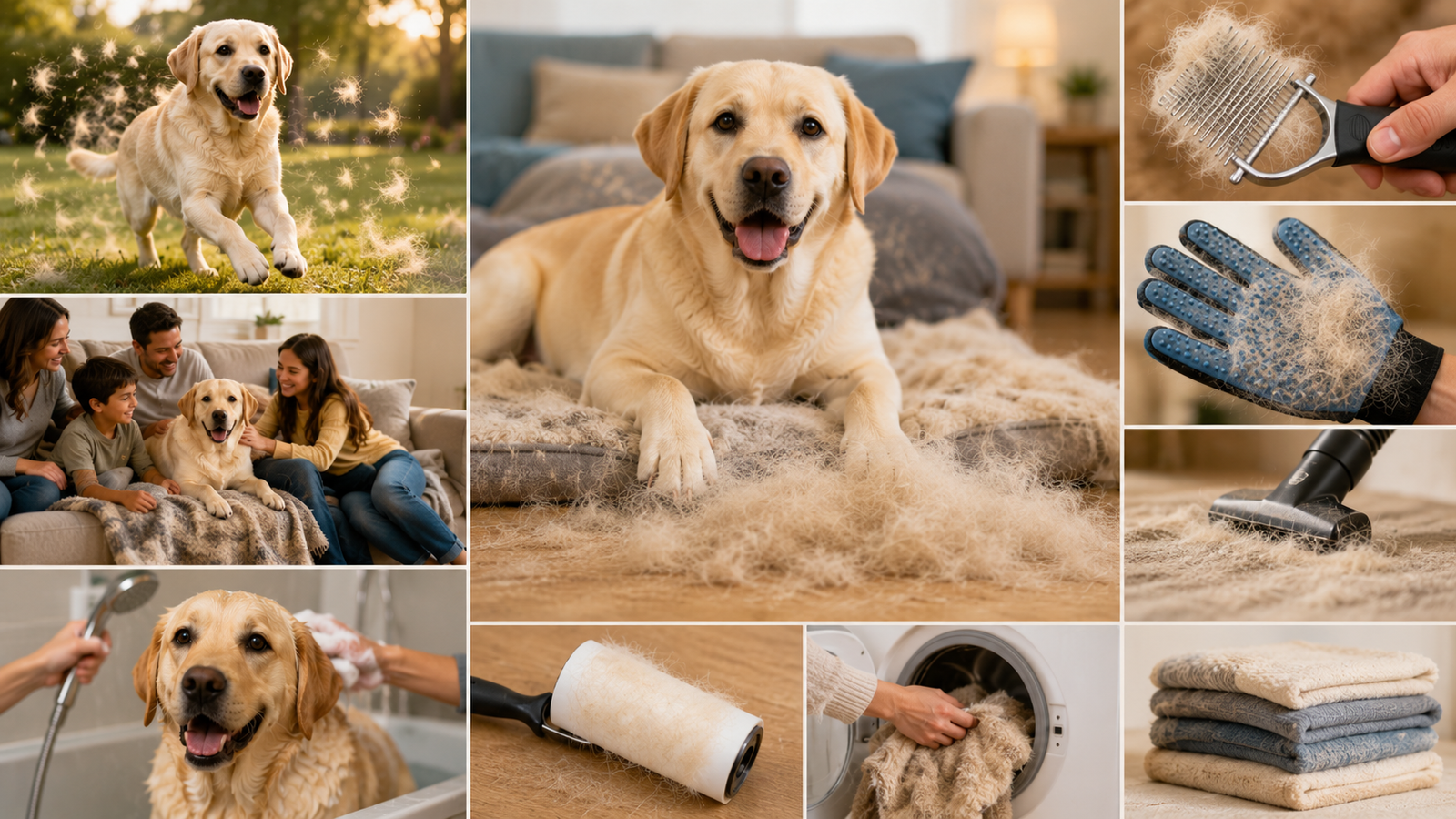
To successfully extract the dead fur before it drops onto your floors, utilize this specific three-tool grooming regimen:
Tool 1: The Undercoat Rake
- What it does: This tool features a row of rounded, metallic tines designed to bypass the topcoat entirely and hook onto the loose, dead downy fur of the undercoat.
- How to use it: Use light pressure and pull the rake in the exact direction of hair growth. Focus heavily on the “skirt” around the hindquarters and the thick ruff around the neck, where the undercoat is densest.
Tool 2: The Slicker Brush
- What it does: A wide brush packed with fine, short wire pins. It excels at catching finer loose hairs on the surface and smoothing out the coat.
- How to use it: Use this for daily 5-minute maintenance sessions to clear out daily surface drop-off and distribute your Lab’s natural skin oils.
Tool 3: The Rubber Grooming Mitt (or ZoomGroom)
- What it does: A soft, rubberized brush or glove that relies on static electricity and friction to pull short, loose guard hairs directly off the dog.
- How to use it: Use this in circular motions over your dog’s body. Because it feels like a comforting massage, it is an exceptional tool for Labs that are nervous around metallic grooming rakes.
The Anti-Shed Bathing Protocol: The Blowout Technique
Bathing your Labrador improperly can actually worsen shedding by drying out their skin, leading to brittle hair breakage. However, when executed with the correct sequence and products, a bath can safely remove a massive percentage of the undercoat all at once.
Follow this exact veterinary-groomer protocol once every 4 to 6 weeks:
1.The Dry De-Shedding Prep:Pre-Bath Maintenance.
Thoroughly brush your dry Labrador with an undercoat rake for 10 minutes before introducing water. Wetting a dense, unbrushed undercoat tightens the dead hair nodes, making them significantly harder to extract during the washing process.
2.Apply an Anti-Shed Shampoo and Conditioner:The Wash Cycle.
Saturate the coat with lukewarm water and apply an omega-infused, soap-free anti-shedding shampoo. Work it deeply into the skin to loosen follicle roots. Follow up with a heavy-duty canine conditioner, letting it sit for 5 minutes. The conditioner lubricates the dead hair shafts, allowing them to slide out effortlessly.
3.Utilize a High-Velocity Dog Dryer:The Drying Phase.
Do not rely on towel drying or a weak human hair dryer. Use a specialized high-velocity canine blaster dryer. Hold the nozzle close to the skin and use sweeping motions. The concentrated velocity of air literally blasts the wet, dead undercoat out of the follicles, creating a cloud of loose hair safely outside your living space.
4.The Post-Dry Line Brushing:The Final Sweep.
Once the coat is 100% dry, run your slicker brush through the fur one final time. You will find that the combined action of the conditioner and high-velocity air has brought all the remaining loose hair directly to the surface for effortless collection.
Nutritional Foundations: Reducing Shedding From Within
The strength of a Labrador’s coat is a direct reflection of their internal metabolic health. If a dog’s diet lacks foundational structural lipids, the hair follicles become weak, causing the hair to drop prematurely out of its natural growth cycle.
To fortify the coat from the inside out, optimize their diet with these targeted adjustments:
- Incorporate High-Quality Omega-3 Fatty Acids: Supplement your Labrador’s meals with wild-caught salmon oil or small amounts of sardines packed in water. Rich in Eicosapentaenoic Acid (EPA) and Docosahexaenoic Acid (DHA), these fatty acids reduce underlying skin inflammation, nourish the hair root, and give the coat its trademark glossy shine.
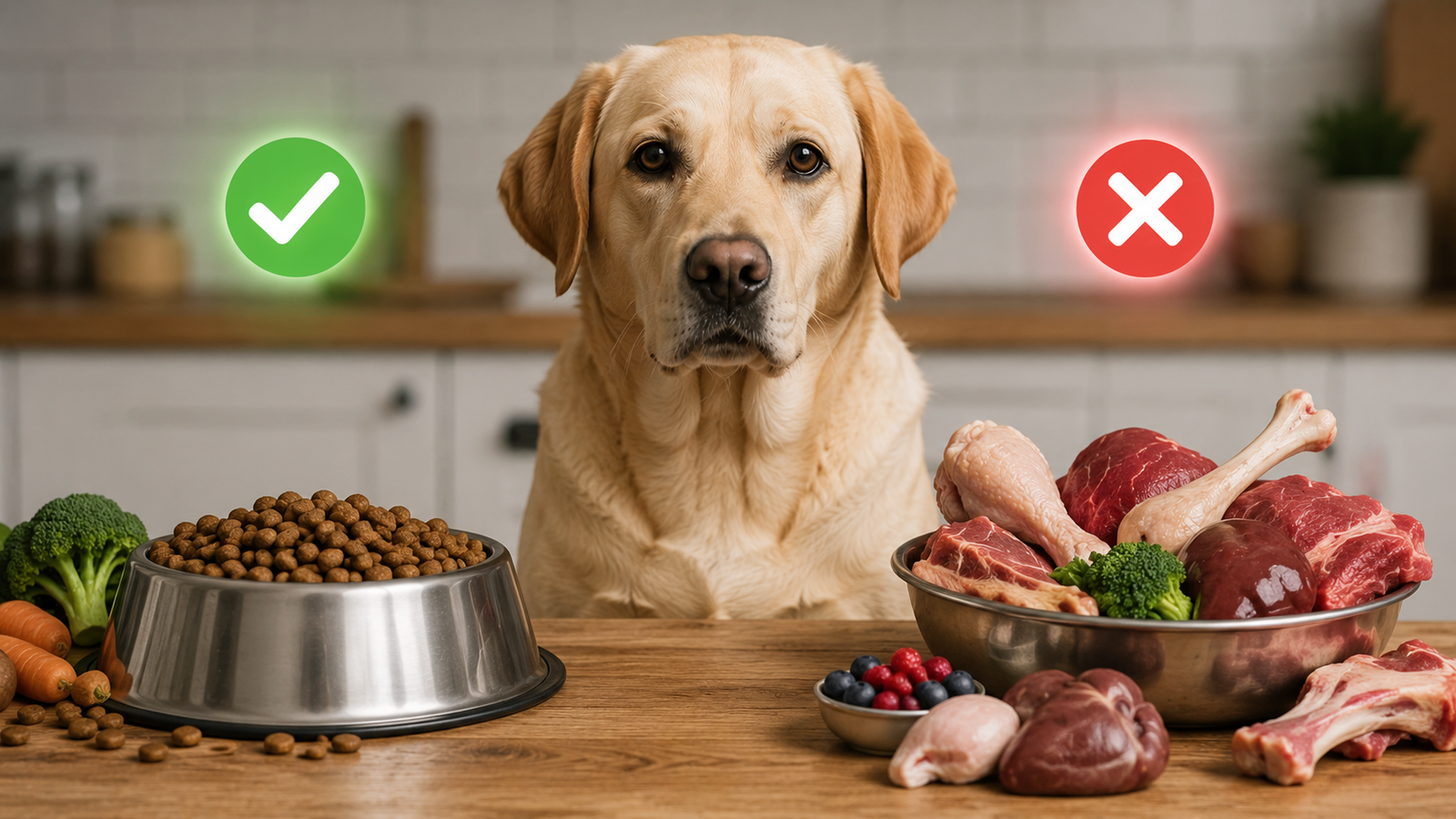
- Audit Your Protein Source: Hair is composed of roughly 90% protein (specifically keratin). If your commercial kibble relies heavily on plant-based grain fillers rather than real, animal-based proteins (like chicken, beef, or lamb), your Lab’s body will divert protein away from the coat to protect core internal organs, resulting in brittle, chronic shedding.
- Ensure Proper Hydration: Dehydrated skin leads to dry, brittle hair follicles that snap and drop easily. Ensure your Labrador always has access to clean, fresh water, and consider adding a splash of bone broth to their meals to increase daily fluid intake.
Frequently Asked Questions (FAQ)
Can I shave my Labrador to stop them from shedding?
No. You should never, under any circumstances, shave a double-coated breed like a Labrador. Shaving removes their vital protection against heat and sun, putting them at high risk for heatstroke and sunburn. Furthermore, the undercoat often grows back faster than the topcoat, permanently ruining the coat’s texture and worsening the shedding problem.
How do I know if my Lab’s shedding is abnormal?
Normal shedding is uniform across the entire body, leaving the underlying skin healthy and unblemished. If you notice patchy bald spots, symmetrical hair loss, raw red skin, crusting, or if your dog is constantly scratching and licking a specific area, this indicates an underlying issue like flea allergy dermatitis, environmental allergies, or hypothyroidism that requires immediate veterinary care.
How often should I brush my Labrador during heavy shedding season?
During the peak spring and fall coat-blowing windows, you should ideally brush your Labrador daily for 10 to 15 minutes with an undercoat rake or slicker brush. Outside of these heavy seasons, a thorough brushing 2 to 3 times a week is perfectly sufficient to keep the loose hair under control.
Conclusion: Embellish the Boundary, Don’t Fight the Fur
Managing Labrador shedding isn’t about finding a magical cure that stops hair production entirely—it’s about building a consistent, highly disciplined routine. By arming yourself with an undercoat rake, optimizing their internal health with Omega-3 fatty acids, and utilizing the high-velocity blowout technique, you can easily minimize the hair accumulation in your home by up to 80%.
Accept the fur as a natural badge of honor that comes with owning one of the most loving, loyal breeds on earth, keep your vacuum handy, and enjoy the beautiful bond you build during your grooming sessions.
What is the toughest area of your home to keep free of Lab hair right now? Let me know your current cleaning bottlenecks, and I can suggest specific fabric treatments or tool routines to help keep your space clean.