The moment is finally here. You are sitting in your car or living room, holding a soft, warm, 8-week-old Labrador Retriever puppy. As you look into those soulful, liquid-brown eyes, a wave of pure joy washes over you—immediately followed by a sudden, jarring spike of panic.
What exactly do I do now?
The first seven days of your Labrador puppy’s life in your home are the most critical days they will ever experience. In this brief window, your puppy’s brain is working like a sponge, mapping out boundaries, calculating human trustworthiness, and forming foundational habits that can last a lifetime.
If you spend this week coddling their every cry, skipping routines, or allowing them free rein of your house, you will inadvertently set yourself up for months of housebreaking accidents, severe separation anxiety, and structural destruction.
But if you implement a deliberate, proactive blueprint, you can bypass the traditional “new puppy burnout” entirely.
This definitive, expert-led survival guide breaks down the 7 essential things you must do during your Labrador puppy’s first week home to guarantee a seamless transition, peaceful nights, and a confident, well-adjusted companion.
1. Establish the “Safe Zone” and Enforce Confinement (Day 1)
When a puppy leaves their mother and littermates, their entire world is turned upside down. Dropping them directly into a massive, multi-room house is an absolute sensory overload. They don’t see a luxury home; they see a vast, intimidating wilderness where they can easily get lost or make a bathroom mistake.
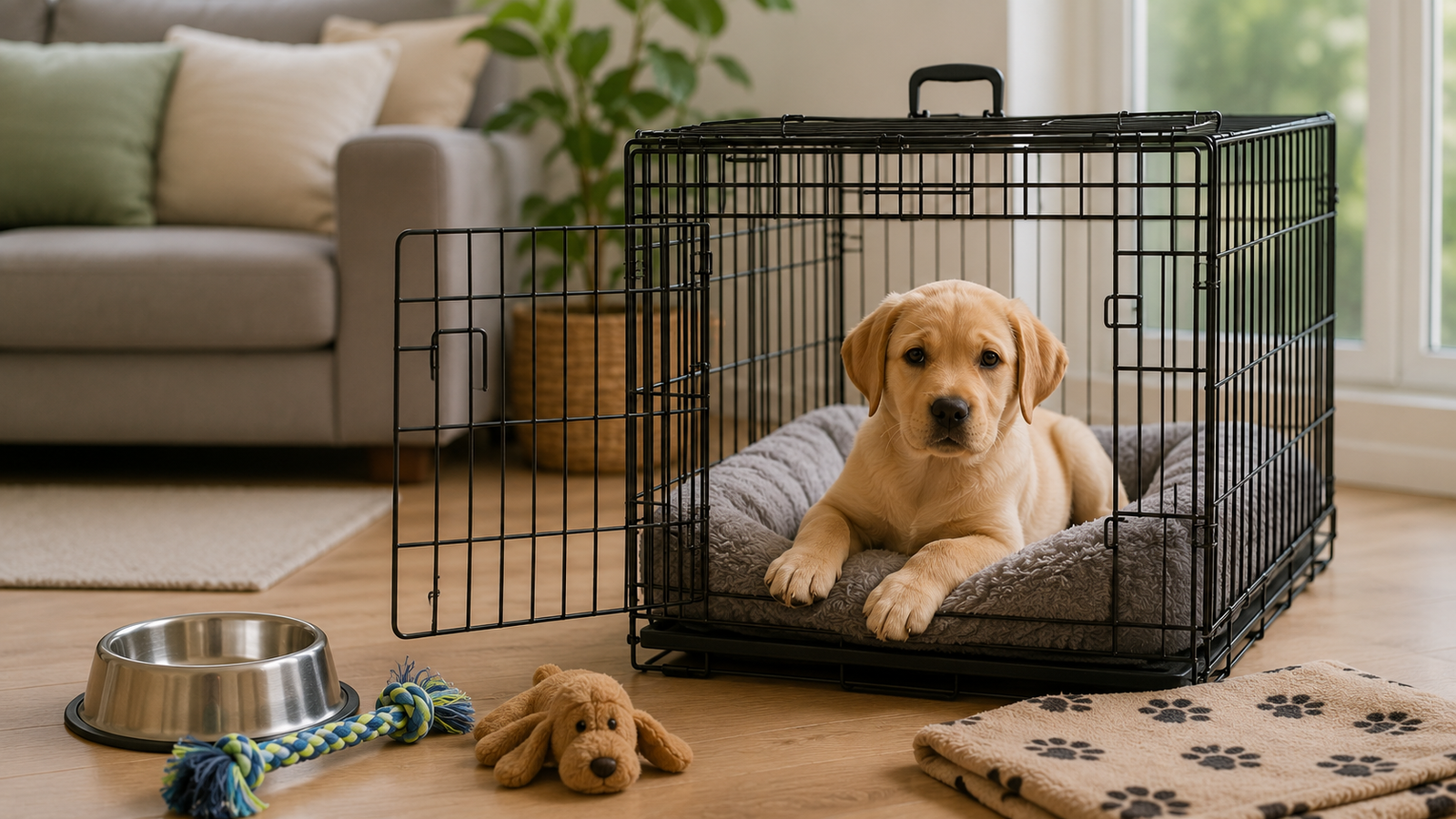
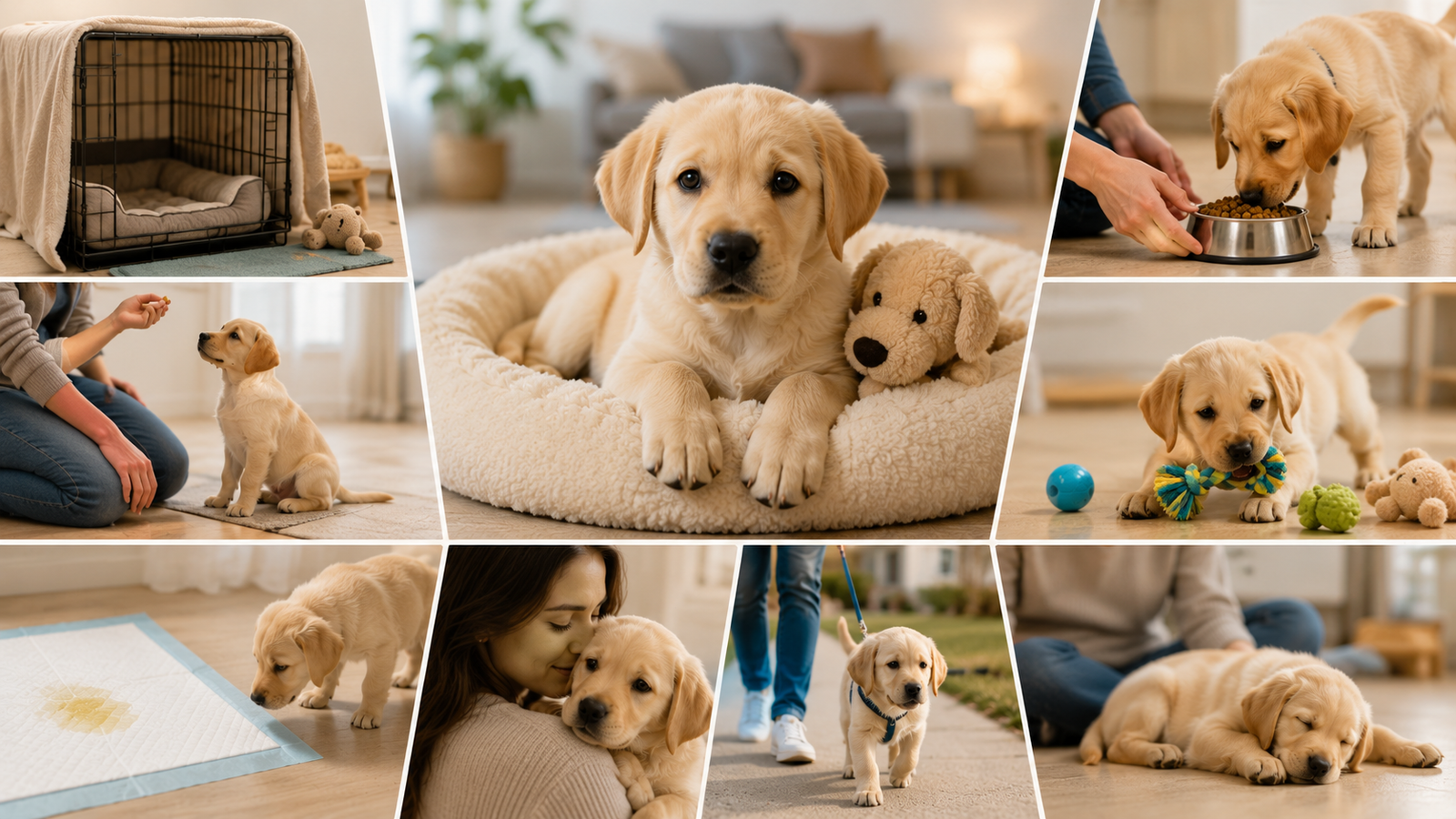
Before your puppy even crosses your threshold, set up a dedicated Safe Zone. This should be a small, easily cleaned area like a kitchen corner or utility room, isolated with a sturdy puppy playpen. Inside this zone, place:
- A high-walled plastic crate lined with comfortable bedding.
- A spill-proof water bowl.
- A couple of safe, durable rubber chew toys.
By restricting their environment immediately, you dramatically accelerate housebreaking because a puppy naturally avoids eliminating where they sleep and play. It also keeps them completely safe from chewing on hidden electrical cords or hazardous baseboards when your back is turned.
2. Implement the Micro-Break Crate Training Protocol
One of the costliest mistakes new puppy parents make is waiting for their Labrador to scream before introducing the crate, or using it exclusively as a place for punishment. To prevent severe, lifelong separation anxiety, your puppy must learn from day one that the crate is a peaceful, rewarding sanctuary.
Instead of locking them inside for hours right away, utilize the Micro-Break Protocol during quiet periods:
1.Feed Meals inside the Crate:Day 1 – Focus: Comfort.
Place your puppy’s food bowl directly inside the open crate. Let them walk in, eat, and walk back out freely. This pairs the physical space of the crate with a highly positive neurological reward.
2.Introduce Brief, Incremental Closures:Days 2 to 3 – Focus: Duration.
When your puppy is naturally drowsy after a play session, place them in the crate with a stuffed chew toy. Close the door calmly. Sit directly outside the crate for 2 minutes, then open it only when they are completely quiet. Never open the door while they are actively whining or barking, or you will teach them that noise equals freedom.
3.Execute Visual Disappearance Drills:Days 4 to 7 – Focus: Distance.
With the puppy resting comfortably inside the closed crate, quietly step out of their line of sight into an adjacent room. Stay away for 30 seconds, then return before they panic. Gradually scale this time from 30 seconds up to 15 minutes by the end of the first week.
3. Launch a Synchronized Housebreaking Clock
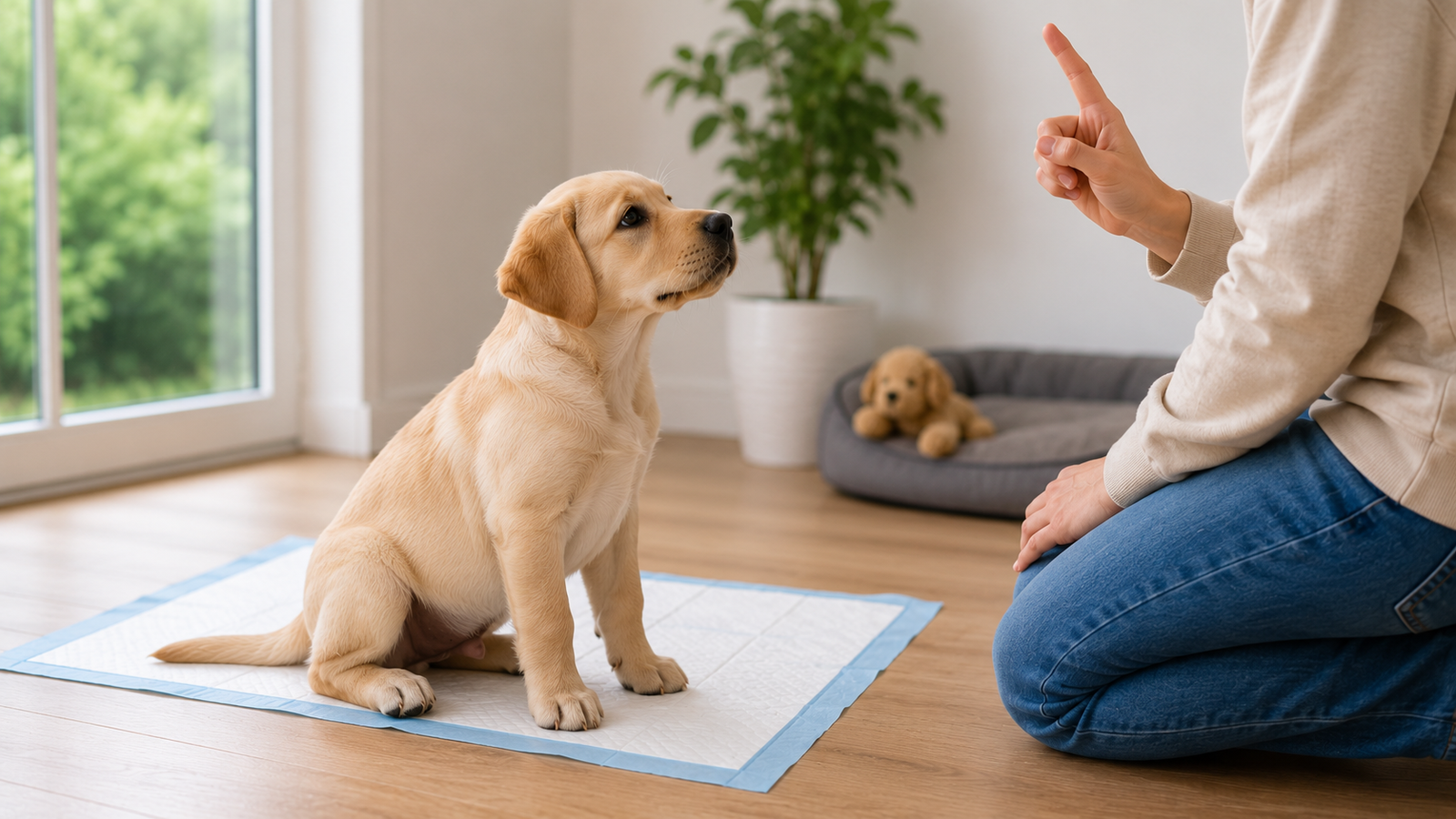
Because Labradors are highly food-motivated, their digestive systems operate like precise clockwork. At 8 weeks old, a puppy’s bladder capacity is exceptionally small. They cannot physically hold their urine for more than 1 to 2 hours during the day.
To stop accidents before they can happen, do not wait for your puppy to signal that they need to go out. Take them to their designated outdoor bathroom spot every time the internal clock hits these specific milestones:
- Immediately when they open their eyes in the morning or wake up from a nap.
- Exactly 10 to 15 minutes after finishing any meal or drinking water.
- Every 20 to 30 minutes during intense, active play sessions.
- Right before they are placed into their crate for bed.
When they successfully eliminate outside, throw a mini-celebration. Offer a high-value treat within 3 seconds of execution and use a cue phrase like “Go potty!” This distinct association quickly teaches them that holding it for the great outdoors yields massive rewards.
4. Ditch the Food Bowl and Hand-Feed for Bond Building
An 8-week-old Labrador does not automatically understand that you are their provider, protector, and leader. If you simply place a bowl of food on the floor and walk away, you miss out on an incredibly valuable psychological training window.
During the first week, measure out their daily kibble allowance and use at least half of it for hand-feeding and basic engagement games.
- Sit on the floor with your puppy and feed them individual pieces of kibble whenever they make direct eye contact with you.
- Say their name in a cheerful voice, back away a few feet, and reward them when they chase after you.
This simple exercise builds an incredibly strong bond, teaches them that your presence is the source of all good things, and jumpstarts their focus for future obedience training.
5. Introduce Gentle, Safe Sensory Desensitization
While you must protect your puppy from infectious diseases by keeping their paws off public ground before their final vaccines, you cannot afford to skip sensory exposure during this fragile developmental window.
During the first week, focus on body handling and low-volume environmental sounds:
- The Handling Routine: Gently touch and massage your puppy’s paws, look inside their ears, lift their lips to inspect their teeth, and touch their tail. Pair each touch with a small treat. This desensitizes them to physical manipulation, ensuring they are easy to manage during future vet visits and grooming sessions.
- The Sound Routine: Play recordings of thunderstorms, fireworks, city traffic, and crying babies on your phone or TV at a very low, ambient volume while your puppy plays or eats. This prevents sound sensitivities from developing later in life.
6. Complete a Dedicated Veterinary Checkup Within 72 Hours
Do not delay your first official veterinary visit. Most reputable breeders and rescue organizations explicitly require a professional health evaluation within 48 to 72 hours of adoption to validate health guarantees.
During this baseline appointment, your veterinarian will:
- Analyze a fresh fecal sample to screen for common microscopic parasites like roundworms, giardia, or coccidia.
- Establish a precise, customized schedule for their remaining booster vaccinations (DHPP/Parvovirus) and heartworm preventatives.
- Perform a thorough physical assessment to check for structural anomalies, heart murmurs, or umbilical hernias.
7. Standardize the “Boring” Bedtime Routine
Your puppy’s first few nights away from their litter can be heartbreaking. They will naturally whine or cry when placed into the crate because the sudden drop in ambient temperature and body contact triggers a biological fear of isolation.
To help them settle peacefully without creating bad habits:
- Use a Warmth Simulation: Place a safe, microwave-warmed heat pack or a specialized behavioral heartbeat toy inside the crate. This beautifully mimics the physical sensation of sleeping next to their littermates.
- Keep Midnight Potty Trips Boring: If your puppy wakes up crying at 2:00 AM, they likely need to eliminate. Pick them up calmly, carry them directly to their outdoor bathroom spot on a leash, and give them 2 minutes to go. Do not talk to them, do not play, and do not offer high-value treats. Once they finish, place them directly back into the crate. This teaches them that nighttime crying only earns a boring bathroom break, not a middle-of-the-night party.
Frequently Asked Questions (FAQ)
My Labrador puppy whines constantly in the crate during the day. Should I let them out?
Only if they are completely quiet for at least 5 to 10 seconds. If you open the door while they are actively barking or whining, you inadvertently reward the noise, ensuring they will scream louder and longer next time. Wait for a brief pause in the crying, reward the silence by opening the door, and focus on playing shorter crate games to build their tolerance.
How much sleep does an 8-week-old Labrador puppy actually need?
Growing Labrador puppies require 18 to 20 hours of sleep per day. New owners often mistake an overstimulated, biting puppy for one that needs more exercise. In reality, a frantic puppy is almost always overtired and requires a structured, quiet nap in their crate.
Is it safe to introduce my new puppy to my resident older dog during the first week?
Yes, but keep the initial interaction short, controlled, and on neutral ground (like a driveway or a quiet front yard). Keep both dogs on loose leashes, allow brief 3-second sniffs, and separate them before tensions rise. Never force an older dog to tolerate a hyperactive puppy’s biting; always give your senior dog a private space to escape to.
Conclusion: A Small Investment for a Lifetime of Success
Surviving your Labrador puppy’s first week home takes discipline, consistency, and a lot of patience. It can feel exhausting to run outside every half hour or to ignore those dramatic puppy whimpers at bedtime.
But remember: the boundaries, schedules, and positive associations you build during these first seven days form the concrete foundation of your dog’s future behavior. Stay strong, keep your routine predictable, and enjoy the beautiful process of watching your new companion transform into a balanced, well-behaved adult Labrador.
What part of your puppy’s first week routine is proving to be the most challenging for you? Share your experiences below, and we can troubleshoot your setup to help everyone get a better night’s sleep.