You are hanging out on the couch with your Labrador Retriever when you notice it: a sudden, rhythmic thump-thump-thump of their hind leg scratching at an ear. A moment later, they stand up, tilt their head sharply to one side, and give their ears a violent shake.
When you lean in close to investigate, a distinct, slightly sweet or yeasty odor hits your nose, and you spy a dark, waxy buildup coating the inside of their ear flap.
If this scenario sounds familiar, your Lab is screaming for a maintenance clean. Because of their beautiful, heavy, floppy ears, Labradors are highly susceptible to trapping moisture, dirt, and debris inside their ear canals. If ignored, this dark, warm environment transforms into a perfect breeding ground for painful bacterial and yeast infections, formally known as otitis externa.
Many well-meaning dog owners try to clean their Lab’s ears using cotton swabs or harsh household chemicals, inadvertently rupturing delicate internal membranes or packing debris deeper into the ear canal.
You do not have to live in fear of ear maintenance. This masterclass guide provides a simple, veterinary-approved protocol outlining the 3 steps to clean your Labrador’s ears safely, protecting their hearing and saving you hundreds of dollars in avoidable vet bills.
The L-Shaped Anatomy: Why Labradors Get Ear Infections
To clean a Labrador’s ear without causing injury, you must understand how their ears are physically built. Unlike the human ear canal, which travels in a straight line directly from the outside world to the eardrum, a dog’s ear canal features a unique “L” shape.
As illustrated in the anatomical diagram above, the canal first drops straight down vertically (vertical canal) before making a sharp, almost 90-degree turn inward horizontally (horizontal canal) toward the fragile eardrum, known as the tympanic membrane.
- The Trap Effect: This L-shaped configuration makes it incredibly difficult for debris, wax, and water to escape naturally.
- The Flap Complication: Because Labradors have heavy, drop-down ear flaps, air circulation to the canal is severely restricted. When a Lab goes swimming, water gets trapped at the base of the horizontal canal, creating a humid, stagnant incubator for yeast and bacteria.
The Golden Rule of Ear Care: Never insert cotton swabs (Q-tips) or pointed instruments into your dog’s ear canal. A cotton swab acts like a plunger in an engine piston, packing the wax and debris directly around the horizontal bend and crushing it against the delicate eardrum, which can lead to permanent hearing loss or severe infection.
Gathering Your Supplies: The Safe Toolkit
Before initiating the cleaning process, gather your supplies in a quiet, easily cleaned area like a bathroom or an outdoor patio. Ear cleaning can get incredibly messy, and your Lab will shake their head, spraying loosened wax onto nearby surfaces.
- Veterinary-Grade Ear Cleanser: Choose a high-quality liquid dog ear cleaner that contains a gentle drying agent (such as salicylic acid or benzoic acid). Avoid products containing alcohol, hydrogen peroxide, or vinegar, as these substances cause intense, blinding pain and chemical burns on inflamed, raw skin tissue.
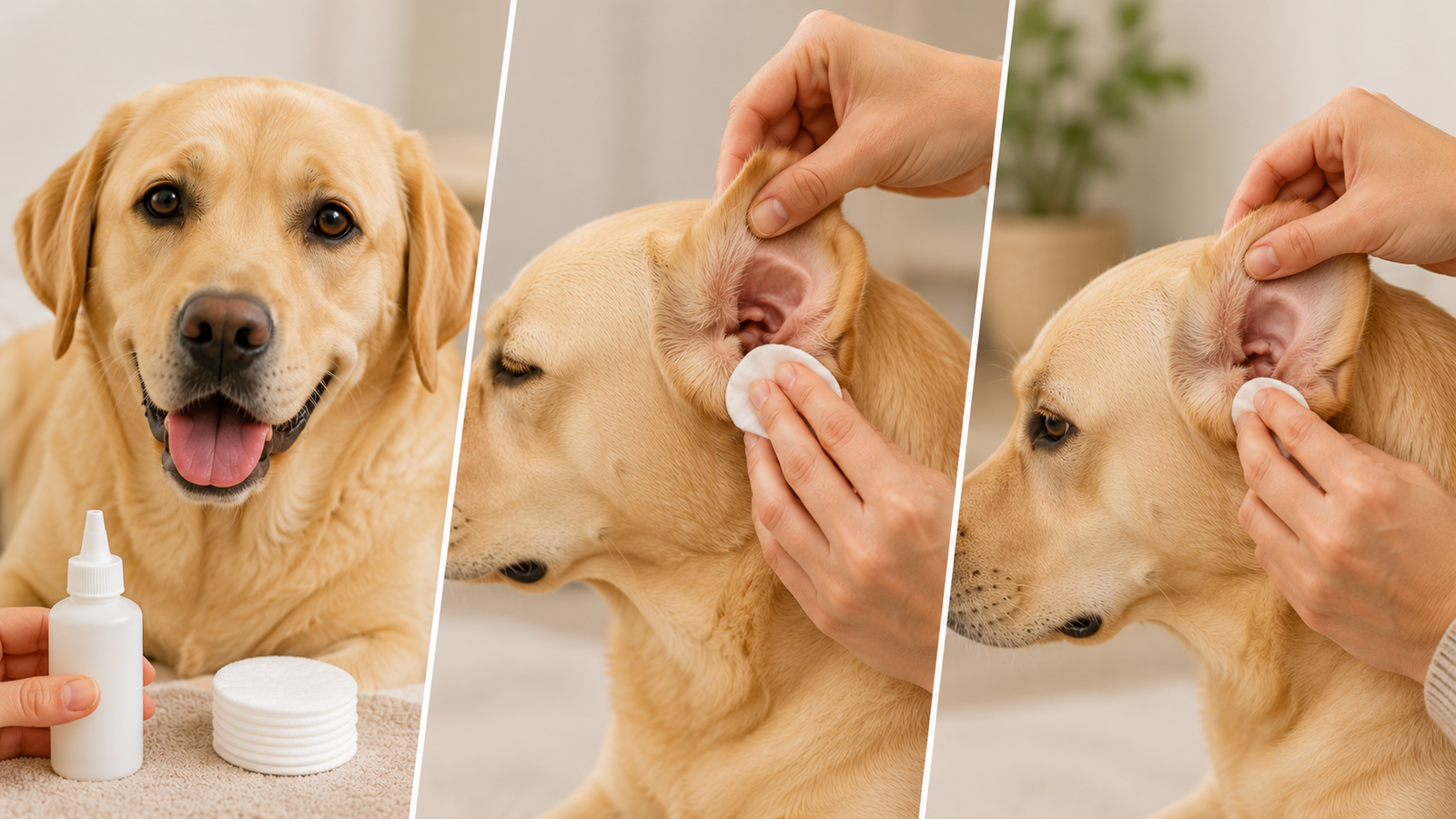
- Large Cotton Balls or Gauze Pads: Avoid cotton-tipped swabs. Standard cosmetic cotton balls or non-woven gauze pads are perfect for wiping away debris safely.
- High-Value Training Treats: Keep a pocket full of cooked chicken or freeze-dried liver bites to reward your Labrador throughout the process, establishing a positive behavioral association with ear handling.
The Master 3-Step Cleaning Protocol
Follow this precise, step-by-step veterinary framework to completely flush out the canal without causing pain or structural damage.
1.Fill and Flood the Canal:Time: 30 Seconds.
Gently lift your Labrador’s ear flap upward with one hand to straighten out the vertical portion of the L-shaped canal. Take your bottle of ear cleanser and position the tip directly over the opening of the ear canal. Squeeze the bottle firmly to completely flood the ear canal with liquid until you can visibly see the fluid level pooling at the top. Do not allow the plastic bottle tip to physically touch the inside of the ear, as this introduces bacteria back into the bottle.
2.Massage the Base of the Ear:Time: 30-45 Seconds.
While continuing to hold the ear flap upward, lower your hand to the very base of the ear, right where the cartilage meets the skull. Firmly massage this area using your thumb and fingers. You should hear a distinct, squishing or “squelching” sound as the liquid moves around inside the vertical and horizontal canals. This physical manipulation acts like a washing machine, breaking up dense walls of hardened wax and pulling deeply embedded debris to the surface.
3.The Head Shake and Wipe Down:Time: 60 Seconds.
Release the ear flap and immediately step back. Your Labrador will instinctively shake their head violently. This rapid shaking uses centrifugal force to fling the loosened wax and dirty fluid out from the horizontal canal up into the outer ear flap. Take a clean cotton ball or gauze pad wrapped around your index finger and gently wipe away the debris from the outer ear flap and the uppermost opening of the canal. Wipe only as deep as your finger can naturally reach.
Playful Maintenance vs. Active Medical Issues
While regular cleaning prevents future issues, flushing an ear that is already suffering from an advanced, active infection can cause your dog immense agony. You must learn to differentiate between normal maintenance needs and situations that require immediate veterinary intervention.
When to Clean at Home
- The skin inside the ear flap is a healthy, pale-pink color.
- The wax accumulation is light brown or yellowish.
- Your Lab shows no signs of physical pain when you massage the base of their ear.
When to See the Vet Immediately
- The ear canal looks bright red, heavily swollen, or completely raw.
- You smell a foul, pungent odor resembling rotting garbage or intense yeast.
- The discharge is thick, black, tar-like, or oozing green pus.
- Your Labrador whimpers, yelps, or snaps when you try to touch their ear area.
- Your dog is constantly tilting their head permanently to one side or losing their physical balance.
Frequently Asked Questions (FAQ)
How often should I clean my Labrador’s ears?
For a standard, healthy Labrador, a routine ear cleaning once every 2 to 4 weeks is perfectly sufficient to keep wax under control. However, if your Lab is an avid swimmer or suffers from environmental allergies, you should execute this cleaning protocol immediately after every single swim or bath to dry out the canal.
Can I use rubbing alcohol or vinegar to clean my dog’s ears at home?
No. Home remedies involving rubbing alcohol, white vinegar, or hydrogen peroxide should be avoided. Alcohol dries the delicate skin tissue to an extreme degree, causing painful cracking. Hydrogen peroxide foams up and leaves behind excess water moisture inside the horizontal canal, which actually accelerates yeast growth. Stick exclusively to formulated veterinary ear solutions.
Why are my Lab’s ears always full of black, tar-like debris?
A heavy accumulation of dark brown or black, coffee-ground-like debris is the classic hallmark sign of an active ear mite infestation or a deep yeast infection. Ear mites are highly contagious microscopic parasites that burrow into the canal skin. This requires targeted prescription insecticidal drops from your veterinarian rather than standard ear washes.
Conclusion: Consistency Protects Your Lab’s Comfort
Keeping your Labrador Retriever’s ears pristine and healthy doesn’t require a trip to a professional groomer every week. By mastering this simple, veterinary-approved 3-step protocol—flooding the canal, massaging the base, and wiping away the expelled debris—you can easily break the chronic cycle of ear scratching and inflammation.
Make this routine a calm, highly rewarded part of your regular monthly care, and your reward will be a blissfully comfortable dog with sharp, healthy hearing for life.
Is your Labrador nervous or combative when you try to handle their ears? Tell me about your dog’s current tolerance levels below, and we can look at a gradual desensitization plan using positive reinforcement to make ear cleaning completely stress-free!